Why Your Summer AC Bill Feels Impossible to Control (And What You Can Do About It)
If you’re wondering how to lower your ac bill during peak summer months, here are the most effective steps you can take right now:
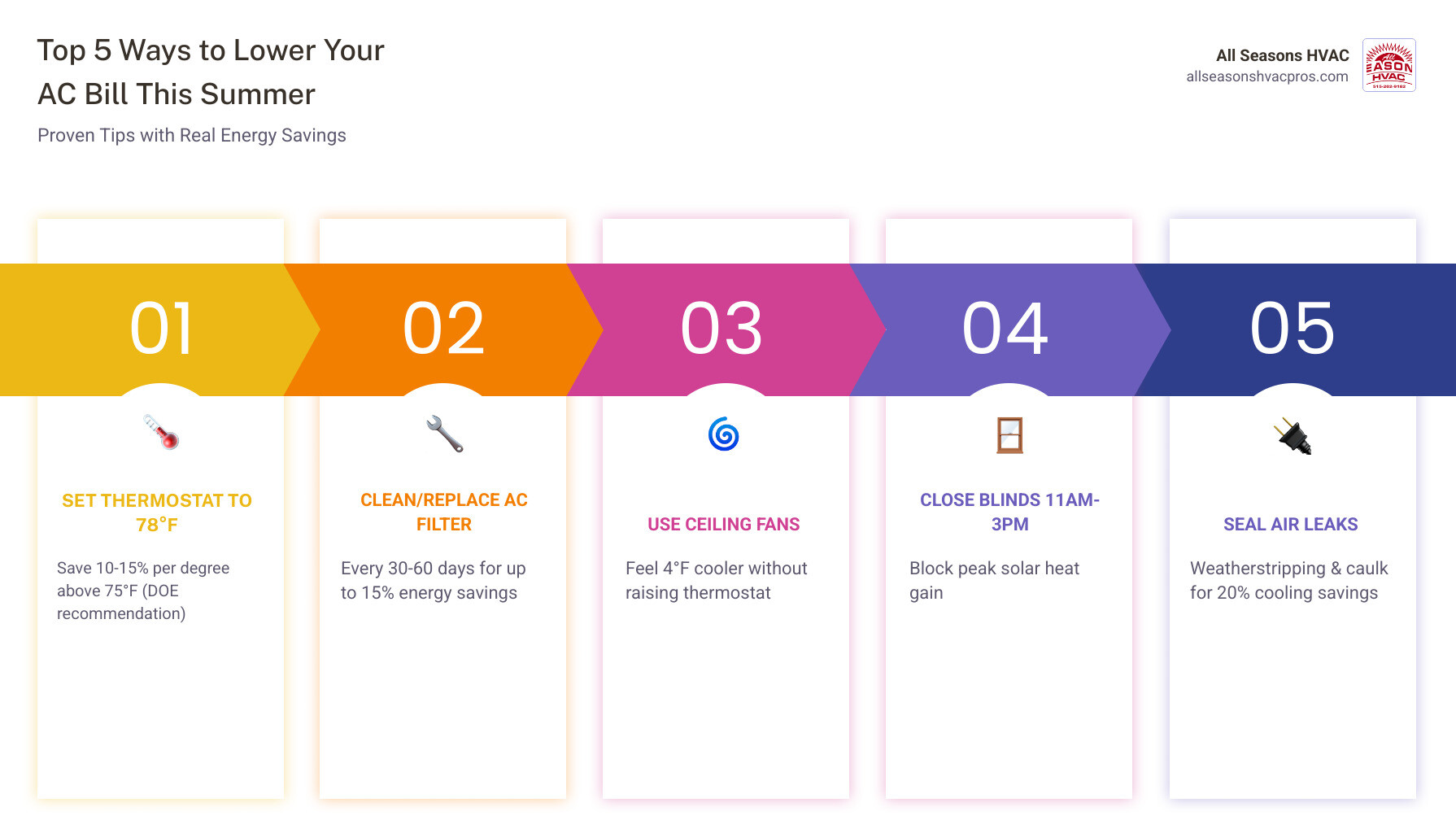
- Set your thermostat to 78°F when you’re home — raise it when you leave
- Replace or clean your AC filter every 30–60 days to save up to 15% on energy use
- Use ceiling fans to feel up to 4°F cooler without touching the thermostat
- Close blinds and curtains between 11 AM and 3 PM to block peak solar heat
- Seal air leaks around windows and doors with caulk or weatherstripping
- Run appliances like dishwashers and dryers after 9 PM to avoid adding heat during peak hours
- Unplug electronics when not in use to eliminate hidden “phantom” energy draw
- Schedule a professional AC tune-up before the hottest weeks hit
The average home spends around $1,900 per year on utility bills — and nearly half of that goes straight to heating and cooling. During the peak summer months in Des Moines and across Central Iowa, that number can climb fast. Record-breaking heat waves push air conditioners to their limits, and the harder your system works, the higher your bill climbs.
The good news? Most of the biggest energy drains are fixable. Some cost nothing at all. Whether your AC is running nonstop or your bill just seems higher than it should be, small and consistent changes can add up to real savings over the course of a summer.
This guide walks you through exactly what to do — from quick daily habits to smarter maintenance routines — so you can stay cool without dreading your next utility statement.
Optimizing Your Thermostat for Efficiency
The thermostat is the brain of your cooling system, and how you interact with it determines your monthly costs. We often see homeowners in Waukee and Ankeny fall into the “refrigerator trap”—cranking the temperature down to 65°F thinking it will cool the house faster. In reality, your AC delivers air at the same temperature regardless of the setting; a lower setting just keeps the compressor running longer, leading to a massive bill.
The U.S. Department of Energy recommends setting your thermostat to 78°F when you are at home. While this might sound high if you’re used to a chilly 70°F, the human body can actually acclimate to higher temperatures within just a few days. For every degree you set your thermostat above 75°F, you could save between 10% and 15% on the energy used for cooling.
We also recommend the 4-by-4 rule: If you’re going to be away from home for more than four hours, raise the temperature by at least four degrees. Adjusting your thermostat by 7 to 10 degrees for eight hours a day can slash your annual cooling costs by up to 10%. If you find that your system isn’t responding correctly to these adjustments, you might be dealing with Ac Thermostat Issues In Waukee Homes that require professional calibration.
Smart Thermostat Settings: How to Lower Your AC Bill During Peak Summer Months
If you’re still using a manual slider or an older programmable model, upgrading to an ENERGY STAR certified smart thermostat is one of the best investments you can make for your Central Iowa home. These devices take the guesswork out of energy conservation by learning your schedule and automatically adjusting temperatures when you’re asleep or at work.
Key benefits of smart thermostats include:
- Remote Scheduling: Use your phone to turn the AC up while you’re at the Iowa State Fair and cool it back down just before you arrive home.
- Occupancy Detection: Many models use motion sensors to detect if a room is empty, preventing you from cooling an unoccupied house.
- Room Sensors: These help balance temperatures in multi-story homes in West Des Moines, ensuring the upstairs bedrooms stay comfortable without over-cooling the main floor.
- Energy Reports: Get monthly insights into exactly when and why your system was running.
Avoiding Thermostat Interference
Where your thermostat is located matters just as much as the setting. If your thermostat is mounted on an exterior wall or near a heat source, it can be “tricked” into thinking the house is warmer than it actually is. This phantom heat causes the AC to cycle on when it isn’t needed.
Avoid placing your thermostat near:
- Direct sunlight from windows.
- Lamps, televisions, or gaming consoles.
- Kitchen appliances.
- Drafty doors or air vents.
If your unit seems to be running constantly despite a high setting, it’s worth investigating Why Your Ac Is Not Cooling Properly to ensure a simple placement issue isn’t draining your wallet.
How to Lower Your AC Bill During Peak Summer Months Through Professional Maintenance
Maintenance isn’t just about preventing breakdowns; it’s about maintaining efficiency. When your system is dirty or neglected, it has to work “twice as hard” to move the same amount of air. This extra strain shows up directly on your utility bill.
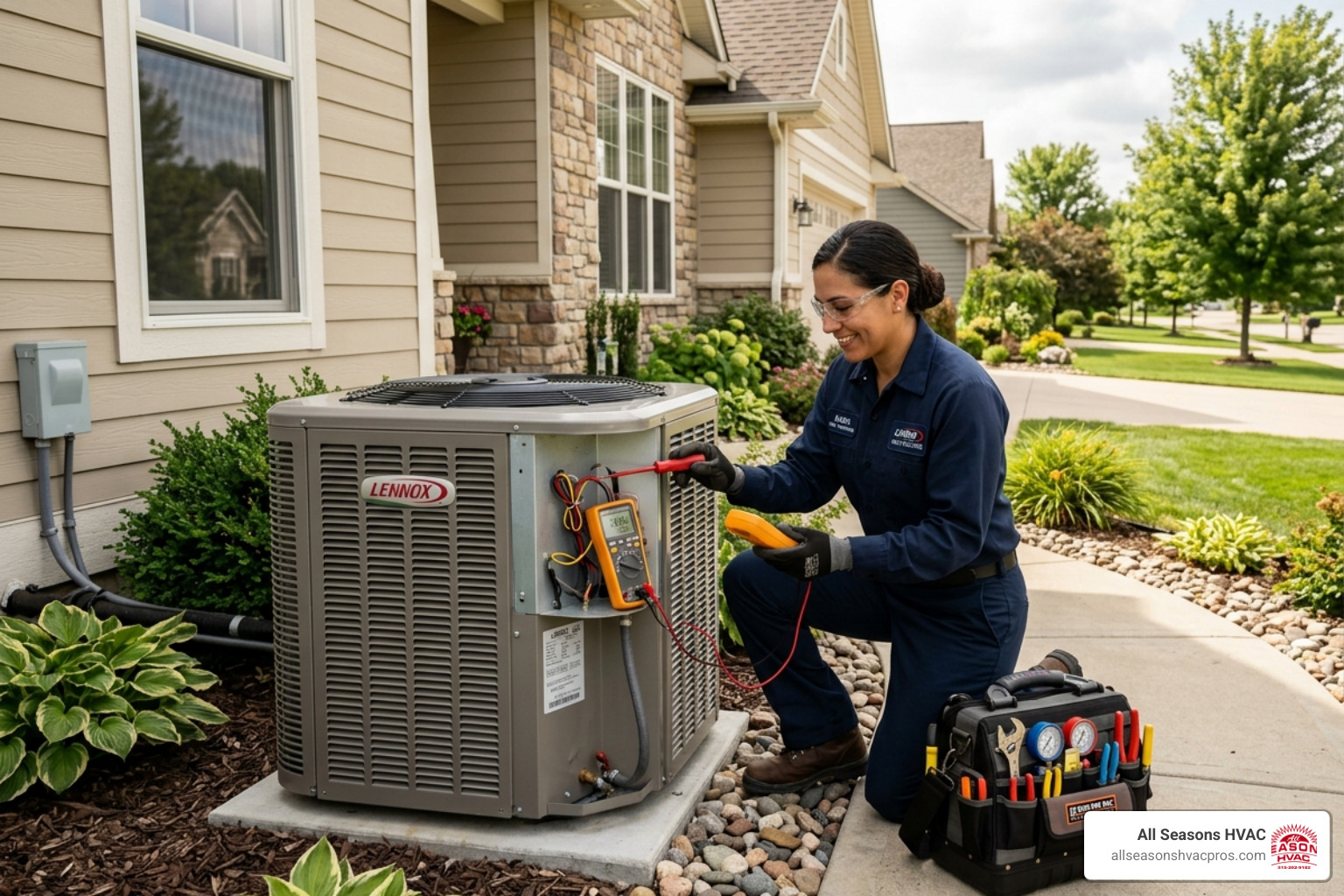
The simplest maintenance task you can perform is changing your air filter. A clogged filter restricts airflow, forcing the blower motor to use more electricity. Clearing a dirty filter can save you between 5% and 15% in energy use immediately. In the dusty summer months of Central Iowa, we recommend checking these monthly. For a deeper dive into system health, our Hvac/Des Moines Ia/Ac Maintenance services ensure every component is primed for peak performance.
Improving Airflow and System Health
Good airflow is the secret to a low energy bill. Beyond the air filter, you should ensure that the outdoor condenser unit—the large metal box outside your home—is clear of debris. Grass clippings, leaves, and cottonwood seeds can clog the delicate fins of the unit, “choking” the system and preventing it from releasing heat.
To optimize airflow:
- Trim Vegetation: Keep shrubs and tall grass at least two feet away from the unit on all sides.
- Clean the Coils: Gently hose off the outdoor unit to remove dirt buildup.
- Check the Vents: Ensure indoor supply and return vents aren’t blocked by furniture or curtains. If you notice weak air coming from your registers, you may need help Solving Poor Ac Airflow Problems.
Identifying Efficiency Red Flags
Sometimes a high bill is a symptom of a mechanical problem. If your system is failing, it will consume significantly more power while providing less comfort. Keep an ear out for Is Your Ac Making Strange Noises, such as grinding or squealing, which could indicate a motor under extreme stress.
Another common issue is “short cycling,” where the AC turns on and off every few minutes. This is incredibly inefficient because the startup phase of a cooling cycle uses the most electricity. Understanding Ac Short Cycling Causes can help you catch a problem before it leads to a total system failure. Additionally, be vigilant for Ac Refrigerant Leak Signs; low refrigerant levels force the compressor to run longer and harder, skyrocketing your energy consumption.
Passive Cooling and Home Sealing
Before you ever turn on the AC, you should focus on keeping the heat out. Your home is like a thermal envelope; if it has holes or thin spots, you are essentially paying to cool the neighborhood. Sealing air leaks around windows and doors with caulk or weatherstripping can save you up to 20% on your annual cooling costs.
Think of your attic insulation as your home’s “hat.” In the summer, a poorly insulated attic can reach temperatures of 150°F, which radiates down into your living space. Ensuring your attic is properly sealed and insulated prevents this heat transfer. Furthermore, leaky ductwork is a major culprit for high bills; the average home loses 20% to 30% of its conditioned air through gaps in the ducts before it even reaches your rooms.
Passive Cooling Hacks: How to Lower Your AC Bill During Peak Summer Months
One of the most effective ways to lower your bill is to block “solar heat gain.” When sunlight hits your windows, it acts like a greenhouse, rapidly heating your interior.
- Window Treatments: Close your blinds, shades, or blackout curtains between 11 AM and 3 PM, especially on south- and west-facing windows.
- Ceiling Fans: Fans use roughly 1/60th the electricity of an AC unit. In the summer, ensure your fan is rotating counterclockwise. This creates a downdraft (the wind-chill effect) that makes you feel about 4 degrees cooler. This allows you to raise the thermostat without losing comfort.
| Cooling Method | Estimated Cost per Hour |
|---|---|
| Central AC | ~$0.36 |
| Window AC Unit | ~$0.14 |
| Ceiling Fan | ~$0.01 (per 3 hours) |
Landscaping for Natural Shade
Long-term savings can also be found in your yard. Planting deciduous trees on the south and west sides of your home can block the sun during the summer while allowing light through in the winter after the leaves fall. Shading your outdoor AC condenser unit with shrubs (while maintaining that two-foot clearance for airflow) can improve your system’s efficiency by up to 10%. Walking into the shade feels instantly cooler to us, and your AC unit feels the same way!
Smart Appliance Habits and Energy Conservation
Your AC isn’t the only thing drawing power. Many household appliances generate significant internal heat, forcing your AC to work harder to compensate. To lower your ac bill during peak summer months, you need to be strategic about when and how you use your home’s technology.
Most utility companies have “peak hours” (usually between 2 PM and 9 PM) when demand on the grid is highest. Shifting heavy appliance use to the early morning or late evening can help reduce the strain and, in some cases, lower your rates if you are on a time-of-use plan. For business owners, it is equally important to Maximize Rooftop Hvac Efficiency by managing building loads during these peak times.
Reducing Internal Heat Loads
Every degree matters when the Iowa humidity is high.
- Cold Water Laundry: About 90% of the energy used by a washing machine goes toward heating the water. Use cold cycles and hang-dry clothes outside to avoid using the dryer, which is a major heat source.
- No-Cook Meals: Avoid using the oven or stove during the hottest part of the day. Use a microwave, toaster oven, or head outside to the grill.
- LED Lighting: Traditional incandescent bulbs are essentially small heaters. Switching to LEDs keeps your home cooler and uses a fraction of the electricity.
- Unplug “Vampires”: Electronics like gaming consoles, coffee makers, and phone chargers draw “phantom” power and generate heat even when turned off. Unplug them when not in use.
If your home feels sticky despite the AC running, it might be that the Ac Making Your Home Humid. Using a standalone dehumidifier can often make 78°F feel like 72°F by removing excess moisture from the air, allowing you to run the AC less frequently.
Frequently Asked Questions
What is the best temperature for my AC in the summer?
The Department of Energy recommends 78°F while you are at home and higher (around 82-85°F) when you are away. While this may take a few days to get used to, the savings are substantial. Every degree you raise the thermostat can trim about 3% off your cooling costs.
Does closing vents in unused rooms save money?
Actually, no! This is a common myth. Modern HVAC systems are designed to operate with a specific amount of air pressure. Closing vents increases the pressure in your ductwork, which can lead to leaks, blower motor strain, and even a frozen evaporator coil. It’s better to keep all vents open to maintain proper airflow.
How often should I change my AC filter during peak months?
In Central Iowa, we recommend checking your filter every 30 days during the peak of summer. If you have pets that shed or if there is a lot of pollen in the air, you will likely need to replace it every month. Keeping a clean filter prevents Fixing Ac Odors Maintenance Tips and ensures your system doesn’t overwork itself.
Conclusion
Lowering your AC bill doesn’t have to mean suffering through the summer. By combining smart thermostat habits, simple home sealing, and consistent maintenance, you can keep your Central Iowa home comfortable and your budget intact.
At All Seasons HVAC LLC, we are proud to serve the Greater Des Moines area, from Ankeny to Norwalk and everywhere in between. We know that home comfort is a priority, which is why we offer budget-friendly financing plans to make high-efficiency upgrades and essential repairs accessible for every family. Don’t let a struggling AC unit drain your bank account this year.
Schedule your professional AC maintenance in Des Moines today and let our expert technicians ensure your system is ready to beat the heat efficiently!