Why Skipping HVAC Maintenance Is a Risk You Can’t Afford
What happens if you skip HVAC maintenance is something every homeowner in Des Moines, Iowa should understand before the next heatwave or cold snap hits. The short answer: your system works harder, increases your utility expenses, and fails sooner – often at the worst possible moment. In the Greater Des Moines area, our systems face extreme temperature swings, from sub-zero winter nights to sweltering, humid July afternoons. This constant cycling makes routine checks even more vital for local homeowners.
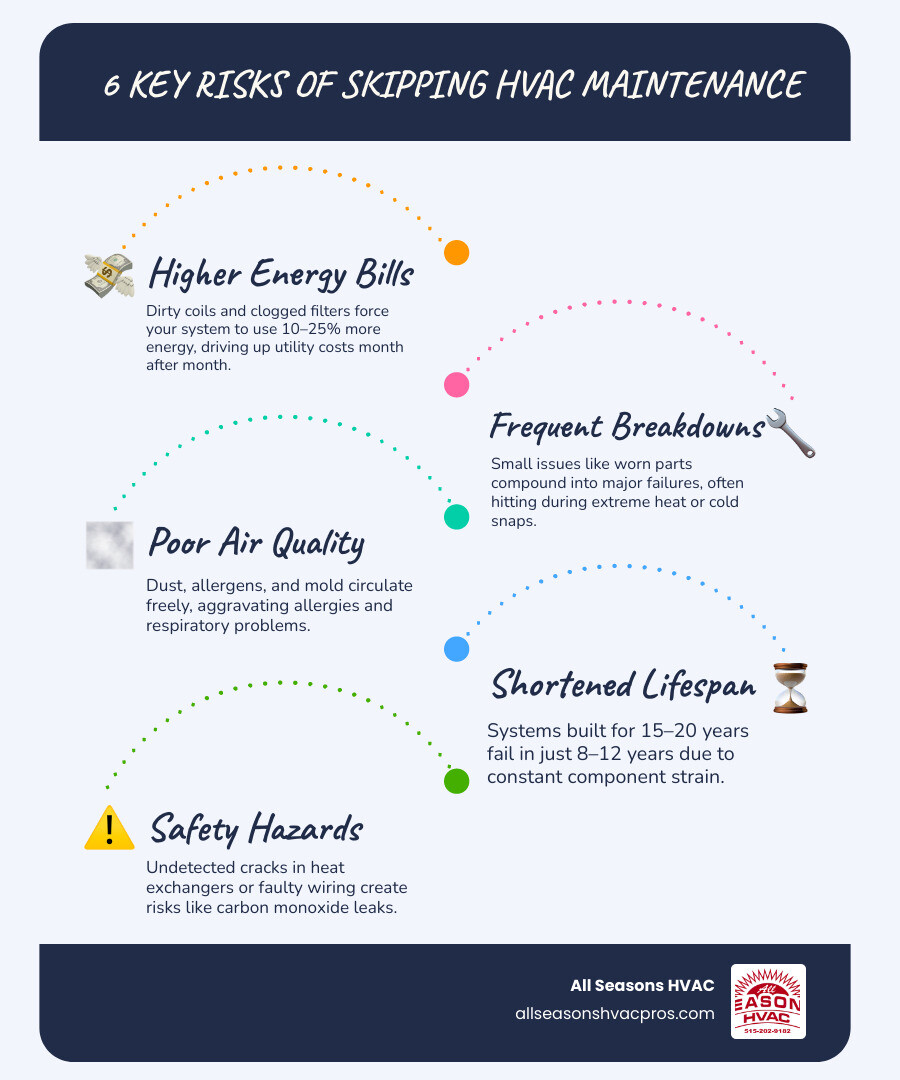
Here is a quick look at what you risk when maintenance gets skipped:
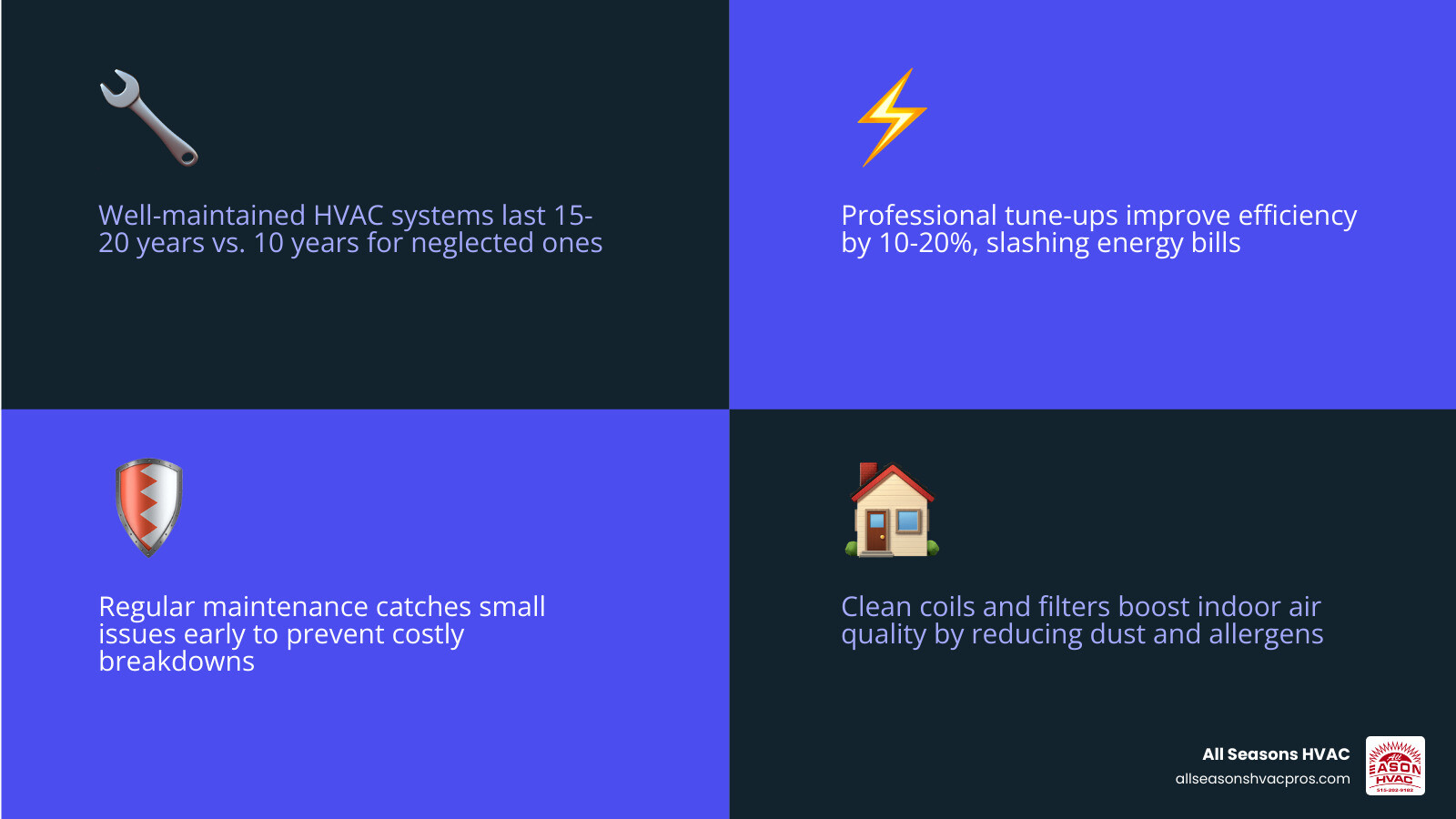
- Higher energy bills – Dirty coils and clogged filters force your system to use 10-25% more energy
- Frequent breakdowns – Small issues compound into major failures, usually during extreme weather
- Poor indoor air quality – Dust, allergens, and mold circulate freely through a neglected system
- Shortened system lifespan – A system designed to last 15-20 years may fail in as few as 8-12 years
- Voided warranty – Many manufacturers require documented maintenance to honor warranty claims
- Safety hazards – Cracked heat exchangers and faulty electrical connections go undetected without inspections
Most homeowners push HVAC maintenance down the to-do list because the system seems to be running fine. The problem is that neglect builds quietly in the background – rising run times, subtle efficiency loss, and slowly wearing components – long before anything feels obviously wrong. By the time a breakdown happens, the damage is already done.
What Happens If You Skip HVAC Maintenance: The Efficiency Drain
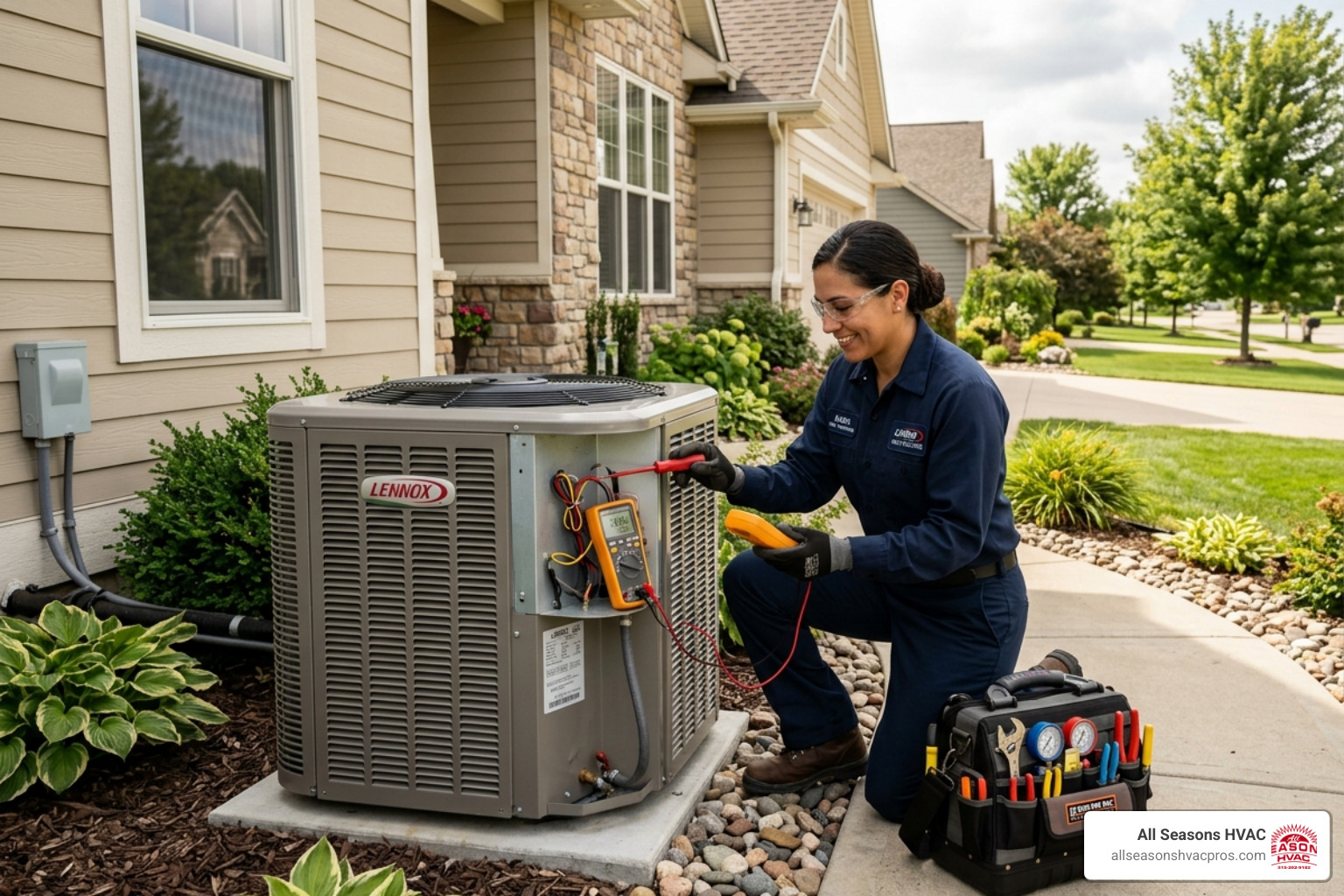
When we talk about what happens if you skip HVAC maintenance, the first thing you’ll likely notice is your utility bills climbing every month. It’s a gradual process, but the efficiency drain is real. Imagine trying to run a marathon while breathing through a straw; that is essentially what your HVAC system does when it is neglected. When a technician performs a professional tune-up, they don’t just clean; they calibrate the system to ensure the refrigerant levels are precise. Even a slight overcharge or undercharge can lead to significant efficiency drops that a simple filter change won’t fix.
The primary culprits behind this efficiency loss are dirty evaporator and condenser coils. Even a small layer of debris on the evaporator coil can significantly raise energy usage over an entire summer. When these coils are caked in dust, they can’t transfer heat effectively. This forces the system to run longer cycles to reach the temperature set on your thermostat.
Furthermore, restricted airflow from a simple clogged filter can raise energy use by 10-20% almost immediately. In our experience serving the Des Moines area, we often see utility bills climb by 10 to 25 percent simply because the equipment is overdue for a professional cleaning and calibration.
| System Status | Energy Efficiency Impact | Estimated Lifespan |
|---|---|---|
| Regularly Maintained | Peak Efficiency (0% loss) | 15-20 Years |
| Neglected (1-2 Years) | 10-15% Efficiency Loss | 12-15 Years |
| Severely Neglected (3+ Years) | 25%+ Efficiency Loss | 8-12 Years |
By scheduling regular Ac Maintenance, you ensure that every component is tuned to draw the least amount of power possible while providing maximum comfort.
Indoor Air Quality and Health Risks
Your HVAC system does more than just control the temperature; it acts as the lungs of your home. It filters the air you breathe, regulates humidity, and keeps pollutants at bay. When you skip maintenance, those lungs become congested. In communities like West Des Moines and Norwalk, outdoor pollutants such as agricultural dust and seasonal pollen frequently find their way indoors. Without a clean filtration system and well-maintained coils, these particles settle in your ductwork and recirculate indefinitely.
A neglected system becomes a breeding ground for dust, pollen, and pet dander. Instead of trapping these particles, a dirty system circulates them throughout your living spaces. For families in West Des Moines or Norwalk, this can lead to increased sneezing, itchy eyes, and exacerbated respiratory issues like asthma or allergies.
Humidity control is another major factor. In the humid Iowa summers, your air conditioner is responsible for removing moisture from the air. If the coils are dirty or the airflow is restricted, the system can’t dehumidify effectively. This leads to that “sticky” feeling indoors and can even encourage mold growth within your ductwork or drain pans.
Professional Ac Maintenance and Ac Maintenance include deep-cleaning components that you can’t reach with a vacuum, ensuring the air inside your home remains fresh and healthy for your family.
Premature System Failure and Shortened Lifespan
An HVAC system is a significant investment in your home’s infrastructure. Under normal conditions with regular care, these systems are designed to last between 15 and 20 years. However, neglect acts like an accelerant for wear and tear. When the system is forced to pull air through a clogged filter or over a dirty coil, the blower motor must work significantly harder. This extra work generates excess heat within the motor itself, leading to insulation breakdown and eventual electrical failure.
When maintenance is skipped, the system suffers from constant strain. Motors run hotter, electrical connections loosen from vibration, and moving parts lose their lubrication. This isn’t just a theory; statistics show that neglect can shorten a system’s lifespan to just 8-12 years. You are essentially losing nearly a decade of service from your equipment.
Think of it like a car. If you never changed the oil, you wouldn’t expect the engine to last 200,000 miles. The same logic applies to your furnace and air conditioner. Small mechanical issues like a worn belt or a weak capacitor are easy to fix during a routine visit. If left alone, they can cause a chain reaction that leads to a catastrophic compressor or heat exchanger failure.
Whether you need Heating Maintenance Grimes Ia or Ac Maintenance, staying on top of your service schedule is the only way to protect your investment for the long haul.
Safety Hazards and Warranty Protection
Beyond comfort and costs, there is the critical issue of safety. This is especially true for gas-powered furnaces used during our harsh Central Iowa winters. A neglected furnace can develop a cracked heat exchanger, which is a serious safety risk that can allow carbon monoxide to leak into your home. In many of the historic or established neighborhoods across Central Iowa, older electrical systems can be particularly sensitive to the high draw of a struggling HVAC unit. Tightening electrical connections and inspecting contactors prevents the kind of arcing that can damage sensitive control boards.
During a professional inspection, we check for:
- Carbon Monoxide Leaks: Ensuring the combustion process is sealed and venting correctly.
- Gas Leaks: Checking connections that may have loosened over time.
- Electrical Hazards: Tightening connections to prevent sparks or fires.
There is also the matter of your manufacturer’s warranty. Most major brands require documented proof of annual professional maintenance to honor warranty claims. If your compressor fails in year five but you haven’t had a single service visit, the manufacturer may deny your claim, leaving you to pay for the entire replacement out of pocket.
This applies to commercial properties as well. Understanding the Signs Commercial Hvac Needs Service is vital for business owners to avoid liability and expensive downtime. And don’t forget your other appliances; Maintaining Your Water Heater is just as important for home safety and efficiency.
Frequently Asked Questions
What happens if you skip HVAC maintenance for a single year?
While it might seem harmless, skipping just one year is often the “tipping point.” You will likely experience a subtle loss in efficiency and a slight rise in utility bills as dust accumulates on the coils. More importantly, hidden wear on components like capacitors or contactors goes unnoticed. These parts often fail during the next season of heavy use, turning a simple maintenance visit into a major emergency repair. We recommend consistent Ac Maintenance to catch these “silent killers” before they stop your system.
What happens if you skip HVAC maintenance during an Iowa summer?
Iowa summers are notorious for high humidity and sudden heatwaves. When you skip spring maintenance, your AC enters the hottest months with dirty coils and potentially low refrigerant levels. The extreme heat puts maximum stress on the system. Neglected units are statistically much more likely to suffer a total breakdown during a peak heatwave when HVAC companies are at their busiest, leading to long, uncomfortable wait times for repairs. Regular Ac Maintenance ensures your system is “battle-ready” for the July heat.
How often should I schedule service to avoid these risks?
To maintain peak performance and safety, you should schedule HVAC maintenance twice a year: once in the spring for your cooling system and once in the fall for your heating system. This ensures each component is ready for the specific demands of the upcoming season. Additionally, following Water Heater Maintenance Tips annually will keep your entire home comfort system running smoothly.
Conclusion
At All Seasons HVAC LLC, we have seen what happens if you skip HVAC maintenance. From the frustration of a mid-summer breakdown in Waukee to the shock of a high energy bill in Ankeny, these issues are almost always preventable. Our mission is to provide the Greater Des Moines area with reliable, expert care that keeps your home comfortable every day of the year.
We understand that home maintenance can be a financial burden, which is why we offer budget-friendly financing plans to make year-round comfort affordable for every family. Don’t wait for your system to give you a “warning sign” that usually comes in the form of a breakdown.
Protect your home, your health, and your investment. Schedule your professional HVAC service today and breathe easier knowing your system is in expert hands.