How a Heat Pump Heats and Cools Your Home: The Quick Answer
Understanding how a heat pump heats and cools your home comes down to one simple idea: instead of burning fuel to create heat, a heat pump moves existing heat from one place to another using electricity.
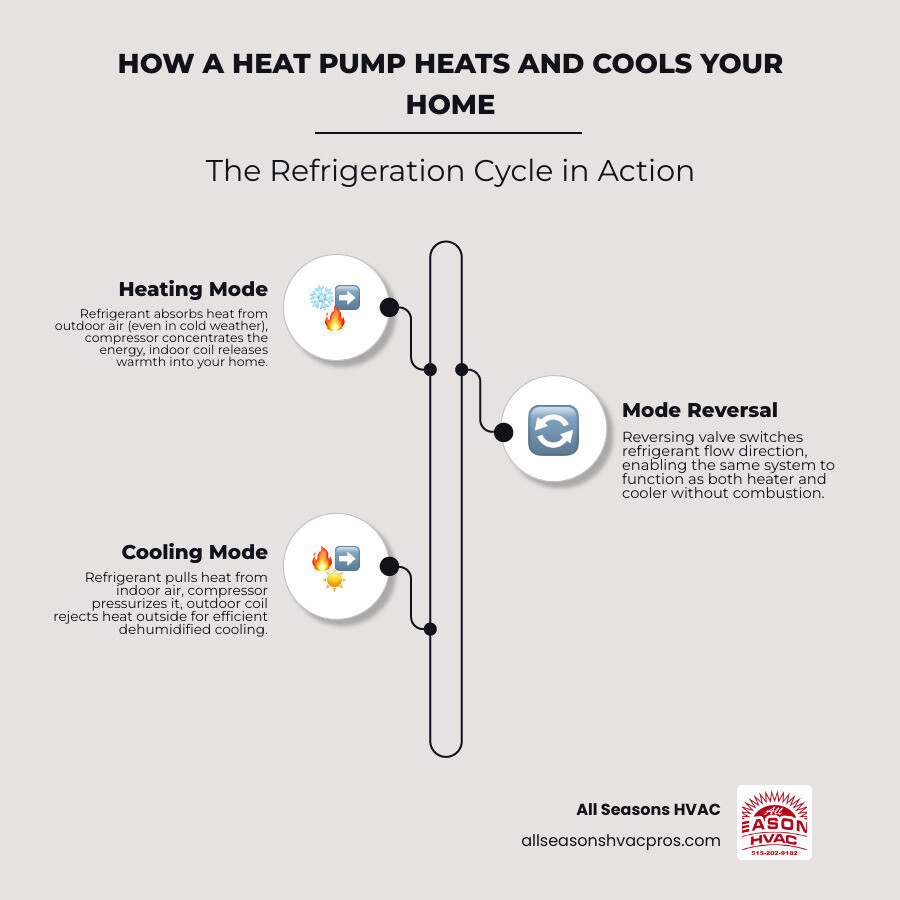
In heating mode: The system pulls heat energy from outdoor air and transfers it inside your home.
In cooling mode: It reverses that process, pulling heat out of your indoor air and releasing it outside.
Here is a quick breakdown:
| Mode | What It Does | How |
|---|---|---|
| Heating | Moves heat from outside air into your home | Refrigerant absorbs outdoor heat, compressor concentrates it, indoor coil releases it |
| Cooling | Moves heat from inside your home to outdoors | Refrigerant absorbs indoor heat, outdoor coil releases it outside |
| Both | Uses electricity — not combustion | No burning of gas, oil, or propane required |
For Des Moines, Iowa homeowners, this matters a lot. Iowa winters can be brutal and summers can be sticky and humid. A system that handles both seasons efficiently — without two separate units eating up your budget — is worth understanding.
Heat pumps are 2 to 3 times more energy efficient than traditional furnaces or electric resistance heating. That kind of efficiency can make a real difference on a monthly utility bill, especially when temperatures swing from below zero in January to the 90s in July.
The catch? Most homeowners have never had someone explain clearly how the technology actually works — or whether it can keep up with a Midwest winter. This guide breaks it all down in plain language, so you can make a confident decision about your home’s comfort system.
Heat Pumps vs. Traditional HVAC: Understanding the Difference

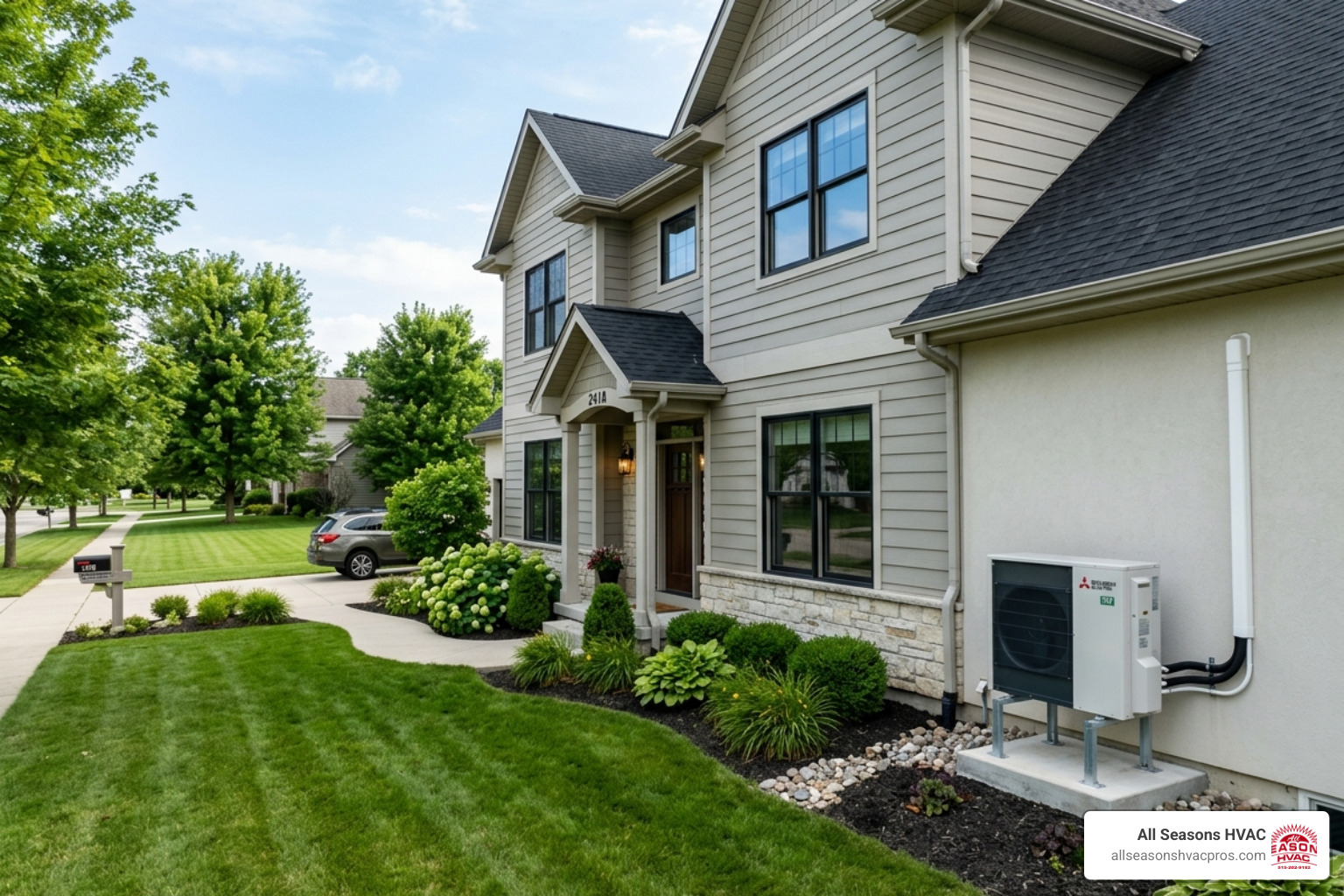
When we look at a heat pump sitting outside a home in Ankeny or Waukee, it looks almost identical to a standard central air conditioner. However, the internal “brain” is much more sophisticated. The primary difference lies in how they manage thermal energy. Traditional furnaces create heat through combustion—burning natural gas, propane, or oil. This process is limited by physics; even the most high-end furnace can only achieve about 98% efficiency, meaning 2% of the energy is lost up the chimney.
In contrast, a heat pump uses electricity to move heat. Because it isn’t “creating” anything from scratch, it can achieve 300% efficiency or higher. For every 1 unit of electricity used, you get 3 units of heat. This leads to a significantly lower carbon footprint and a move toward fossil fuel independence for Central Iowa families.
When evaluating these systems, we look at SEER2 (Seasonal Energy Efficiency Ratio) for cooling and HSPF2 (Heating Seasonal Performance Factor) for heating. Modern units must meet a minimum SEER of 14, but high-performance models can reach ratings as high as 42. Understanding these heat pump installation key factors is the first step in moving away from the “furnace-and-AC” combo toward a more streamlined, all-electric future.
The Mechanics of how a heat pump heats and cools your home
To understand how a heat pump heats and cools your home, you have to look at the “magic” component: the reversing valve. This is the part that tells the refrigerant which way to flow. Without it, you’d just have a standard air conditioner.
The system relies on a continuous loop of refrigerant. This substance has a very low boiling point, allowing it to change from liquid to gas even in cold temperatures. Here is the step-by-step cycle:
- Evaporation: The refrigerant absorbs heat from its surroundings (outside in winter, inside in summer) and turns into a gas.
- Compression: The compressor squeezes that gas, which causes its temperature to spike. Think of how a bike pump gets hot when you use it—that’s the same physical principle.
- Condensation: The hot gas travels to the indoor or outdoor coils (depending on the mode), where it releases its heat and turns back into a liquid.
- Expansion: The liquid passes through an expansion valve, dropping in pressure and temperature, ready to start the cycle again.
Our technicians for heat pump installation ensure that these components are perfectly balanced so that thermal energy transport is seamless, whether it’s 10 degrees or 100 degrees outside.
Winter Operation: how a heat pump heats and cools your home in the Cold
It sounds impossible to pull heat out of “freezing” air, but science tells us that even at -18°C (0°F), the air still contains about 85% of the heat energy it has at 21°C (70°F). The heat pump uses refrigerant that is even colder than the outdoor air to “soak up” that energy.
During Iowa winters, you might notice your outdoor unit frosting over. This is normal! The system has a built-in defrost cycle that temporarily reverses the flow to melt ice off the coils. If you ever feel the heat pump blowing cold air, it could be in this brief defrost mode or potentially using its supplemental heat strips (electric backup) to help during an extreme cold snap.
Summer Cooling: how a heat pump heats and cools your home Efficiently
In the summer, the heat pump acts exactly like a high-efficiency air conditioner. It gathers the heat from inside your living room and “rejects” it outdoors. Because heat pumps are designed for high-precision heat transfer, they are often better at dehumidification than older, single-stage AC units. This is a lifesaver during those muggy July afternoons in Des Moines. By removing moisture while cooling, the system makes 75 degrees feel much more comfortable than a traditional unit might. If you are considering a heat pump installation in Des Moines, you’ll find that the vapor-compression cycle is one of the most energy-efficient ways to stay cool.
Exploring Air-Source, Ground-Source, and Ductless Systems
Not every home is built the same, which is why there are different types of heat pump configurations:
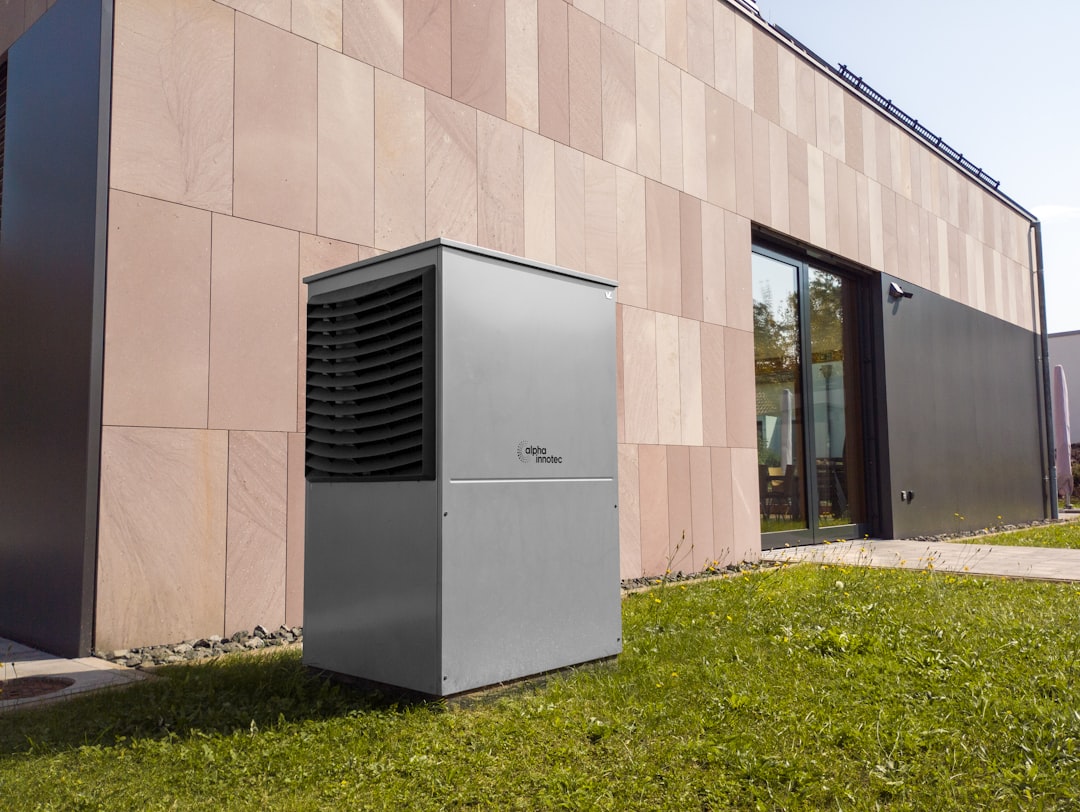
- Air-Source Heat Pumps: The most common residential type. It looks like a standard AC unit and uses the outside air as its heat source or sink.
- Ground-Source (Geothermal) Heat Pumps: These systems use the stable temperature of the earth (usually 50-60°F below the frost line). While the installation is more involved, they offer the highest efficiency because they don’t have to fight against extreme air temperature swings.
- Ductless Mini-Splits: Perfect for older homes in Norwalk or Indianola that don’t have existing ductwork. These systems use small indoor “heads” mounted on walls, allowing for zoned climate control. You can keep the bedroom cool while leaving the guest room warmer, saving even more energy.
| Feature | Air-Source | Ground-Source (Geothermal) |
|---|---|---|
| Efficiency | High (200-300%) | Extreme (400-600%) |
| Lifespan | ~15 Years | 20-25 Years (Indoor), 50+ (Loops) |
| Best For | Most residential retrofits | Large properties / New builds |
| Installation | Standard | Complex (Drilling/Trenching) |
Whether you need a heat pump installation in Ankeny for a new addition or a full system replacement, choosing the right “source” is vital for long-term satisfaction.
Cold-Climate Performance: Efficiency in Iowa Winters
A common myth in the Midwest is that heat pumps stop working when the snow starts to fall. While that was true in the 1980s, modern Cold-Climate Heat Pumps (CCHP) are a different breed. These units use variable-speed compressors that can ramp up their power to maintain 100% heating capacity even when it’s 5°F outside. Some high-performance models can continue extracting heat down to -22°F.
For many homeowners in Waukee or West Des Moines, we recommend a Dual-Fuel Hybrid System. This pairs a high-efficiency electric heat pump with your existing gas furnace. The heat pump handles the heating for 85-90% of the year. When the temperature drops into the “polar vortex” range where electricity might become less efficient than gas, the furnace kicks in automatically to take over the heavy lifting. This ensures you never sacrifice comfort for efficiency. Getting a heat pump installation in Waukee or a heat pump installation in West Des Moines usually involves a professional load calculation to ensure the system is sized perfectly for these Iowa extremes.
Maintenance and Professional Installation Requirements
To keep your system reaching that 15-year lifespan, regular maintenance is non-negotiable. Because a heat pump runs year-round (unlike a furnace that sleeps in summer), it works twice as hard. Homeowners should change filters every 1-3 months and keep the outdoor unit clear of snow, ice, and autumn leaves.
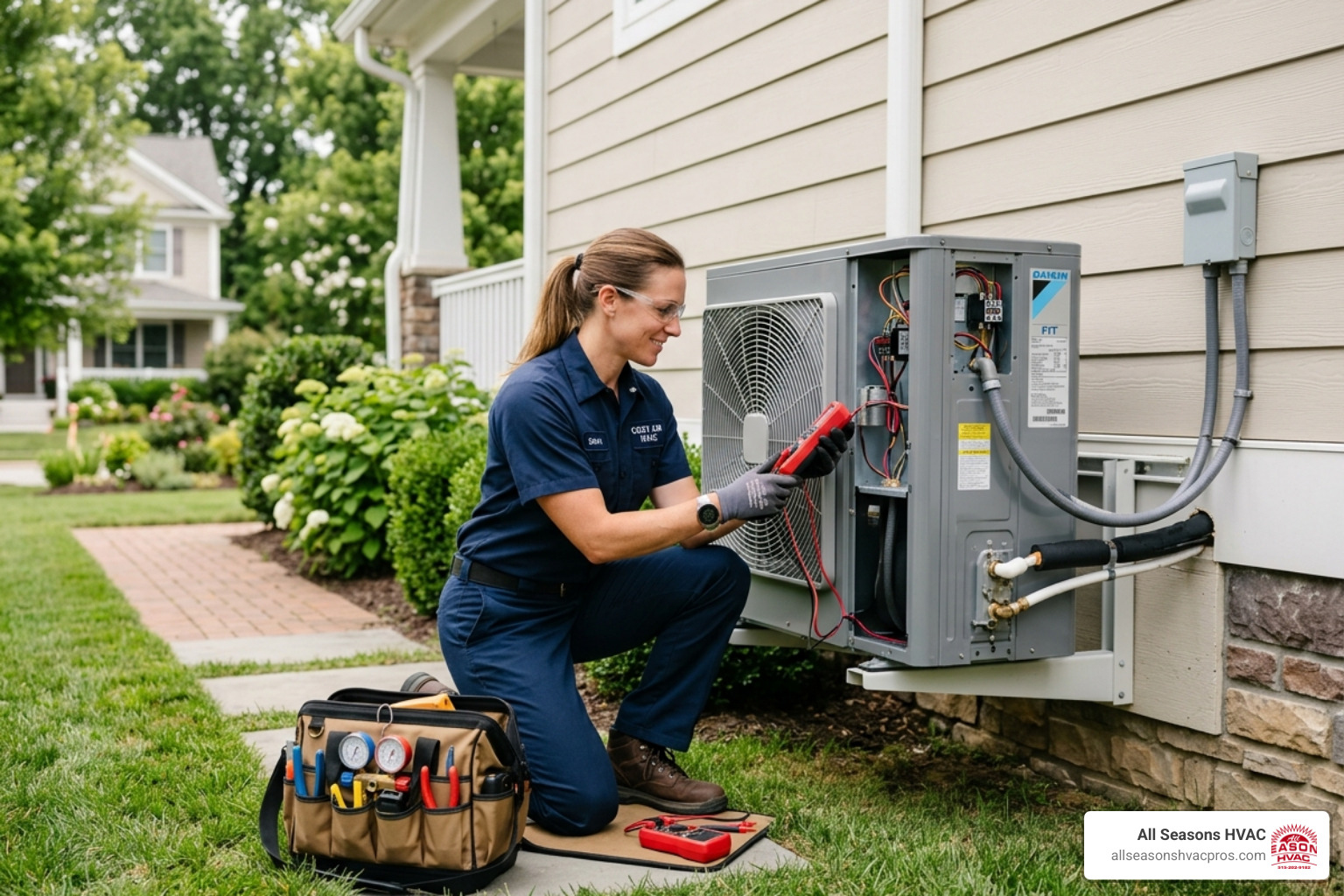
Professional tune-ups should happen twice a year—once before the cooling season and once before the heating season. During these visits, we check refrigerant levels, clean the coils, and inspect the reversing valve.
Now is an incredible time for professional heat pump installation because of the Inflation Reduction Act. Homeowners may qualify for significant federal tax credits and local utility incentives that can offset a large portion of the upgrade. If you are looking for a heat pump installation in Urbandale, our team can help you navigate these rebates to make the transition as affordable as possible.
Frequently Asked Questions about Heat Pumps
Can a heat pump really warm my home when it is below freezing outside?
Yes! Modern cold-climate models are specifically engineered for this. Since air at -18°C still contains 85% of its heat content, the system simply uses high-pressure compression to concentrate that heat to a level that keeps your home a toasty 70 degrees. For those in more rural areas needing heat pump installation in Indianola, these systems have proven their reliability in even the harshest Iowa winters.
How much more efficient is a heat pump compared to a high-efficiency furnace?
A top-tier gas furnace is about 98% efficient. An electric heat pump is regularly 300% efficient. This is because moving heat requires much less energy than creating it through fire. Over time, the electricity savings can be substantial. Homeowners looking for heat pump installation in Norwalk often find that the “all-in-one” nature of the system simplifies their home maintenance while lowering their total energy consumption.
What is the average lifespan of a heat pump system in the Midwest?
The average lifespan is about 15 years. Because the system provides both heating and cooling, it is essentially running in every season. However, with regular maintenance and heat pump installation in Johnston, many units can last even longer. Durable components and modern variable-speed technology reduce the “wear and tear” of the system turning on and off, which helps extend its life.
Conclusion
At All Seasons HVAC LLC, we believe every Central Iowa homeowner deserves a home that is comfortable in July and cozy in January. Whether you are in Des Moines, Grimes, or Mitchellville, understanding how a heat pump heats and cools your home is the key to unlocking a more efficient, modern living space.
We know that upgrading your HVAC system is a big decision. That’s why we offer budget-friendly financing plans to ensure year-round comfort is affordable for every family. From professional installation to seasonal maintenance, our team of local experts is here to help you every step of the way.
Ready to see if a heat pump is right for your home? Contact us today for professional HVAC services in Central Iowa and let’s start planning your home’s high-efficiency future.