Why Getting Boiler Installation in Grimes, IA Right the First Time Matters
Boiler installation in Grimes, IA is one of the most important home comfort decisions you’ll make — especially when Central Iowa winters can push temperatures well before zero. A wrong choice can mean years of high energy bills, unreliable heat, and costly repairs.
Here’s a quick snapshot of what Grimes homeowners need to know before hiring a boiler installer:
- Replacement timing: Most boilers last around 15 years — if yours is older, it’s likely time to consider a new installation
- System types: Gas boilers, electric boilers, combi boilers, and hydronic systems all suit different home setups
- What to look for in an installer: State licensing, hydronics experience, proper sizing, and local permit knowledge
- Modern efficiency: New high-efficiency boilers can reach up to 98% AFUE, cutting energy waste significantly
- Maintenance matters: Annual tune-ups, safety checks, and system flushes protect your investment long-term
- Financing options: Many professional HVAC companies offer affordable payment plans to make installation budget-friendly
Grimes sits in Central Iowa’s climate zone, where subzero windchills, hard water mineral buildup, and wide seasonal temperature swings all put extra stress on heating systems. Picking the wrong installer — or waiting too long to replace an aging boiler — can leave your family in the cold at the worst possible time.
This guide walks you through everything you need to know: how to spot the warning signs that your boiler needs replacing, which system types work best for Iowa homes, what separates a trustworthy installer from a risky one, and how to keep your new system running efficiently for years to come.
Recognizing When You Need a New Boiler Installation in Grimes, IA
Knowing exactly when to pull the trigger on a new boiler installation in Grimes, IA can be tricky. You don’t want to replace a system that still has years of life left, but you certainly don’t want to wait until a blizzard hits and your radiators go stone cold.
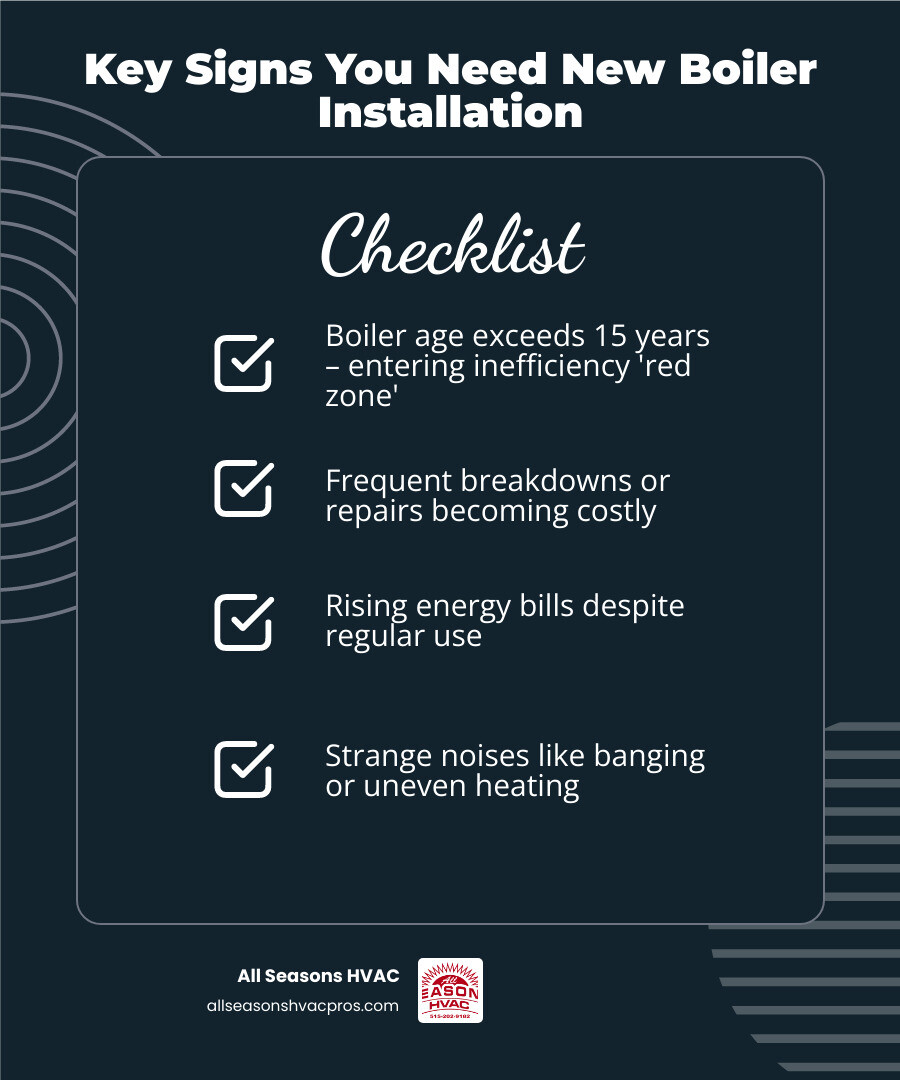
In Central Iowa, boilers typically have a service life of around 15 years. If your unit has crossed that decade-and-a-half mark, it is officially in the “red zone.” Even if it’s still running, it is likely operating at a fraction of the efficiency of a modern unit.
Beyond the calendar, keep a close eye on your basement floor. There are several Signs Your Boiler Is Leaking that indicate internal corrosion or failing seals. Puddles around the base or dampness on the jacket are immediate red flags. You should also listen to the “voice” of your heating system. If you hear strange banging, whistling, or gurgling noises (often called “kettling”), it usually means lime or sludge has built up on the heat exchanger.
Finally, pay attention to how the heat feels. Are some rooms sweltering while others require three blankets? This uneven heat distribution is a classic symptom of a system that can no longer maintain proper pressure or flow. When these issues start stacking up, it’s time to learn When to Consider Boiler Replacement to avoid an emergency mid-winter failure.
Common Performance Issues with Older Units
As boilers age, they often begin “short cycling,” which is when the unit turns on and off rapidly without ever reaching the desired temperature. This puts immense strain on the electrical components and burner assembly. We often see homeowners dealing with Common Boiler Problems & Solutions like pilot lights that won’t stay lit or electronic ignitions that click repeatedly without firing.
If you notice your utility bills creeping up month after month despite no change in usage, your boiler is likely working overtime to compensate for scaled-up components. These are among the Most Common Boiler Repairs Needed, and at a certain point, the cost of these “band-aid” fixes outweighs the investment in a new, reliable system.
Environmental Factors in Central Iowa
Grimes residents face unique environmental challenges. Our local water is known for being “hard,” meaning it’s full of minerals like calcium and magnesium. Over time, these minerals “bake” onto the inside of your boiler, acting like an insulating blanket that prevents heat from reaching the water. This forces the unit to run longer and hotter.
Furthermore, our sub-zero temperatures mean your boiler isn’t just a luxury; it’s a safety requirement. When the windchills hit -30°F, a struggling boiler can lead to frozen pipes and catastrophic water damage. This is why many are looking for Local Boiler Installation in Altoona: Finding the Best Company for the Job and extending that search to Grimes—they need experts who understand the local climate’s demands.
Choosing the Right System for the Iowa Climate
Modern technology has transformed hydronic heating. When we talk about boiler installation in Grimes, IA, we aren’t talking about the massive, cast-iron “monsters” of the 1950s. Today’s high-efficiency models are sleek, quiet, and incredibly powerful. Many reach 98% AFUE (Annual Fuel Utilization Efficiency), meaning 98 cents of every dollar spent on fuel goes directly into heating your home, with only 2 cents lost up the chimney.
Benefits of Modern Boiler Installation in Grimes, IA
Upgrading to a new system offers immediate perks:
- Consistent Radiant Warmth: Unlike forced-air systems that blow dry, dusty air, boilers provide a steady, comfortable heat that doesn’t dry out your skin or sinuses.
- Quiet Operation: Modern burners and circulator pumps are designed to be whisper-quiet.
- Space Savings: Many new boilers are wall-mounted and take up about 1/4 of the space of older floor-standing units.
- Improved Air Quality: Because there are no ducts blowing air around, boilers are excellent for families with allergies or asthma.
Understanding Boiler Types
Choosing the right “flavor” of boiler depends on your home’s layout and your hot water needs. If you’re curious about the process, check out this New Boiler Installation in Altoona: A Steamy Guide to Staying Warm for a deep dive into the technology.
- Combi Boilers: These “combination” units provide both central heating and on-demand domestic hot water in one compact box. They eliminate the need for a separate water heater tank.
- System Boilers: These have most of the major components (like the pump and expansion tank) built into the unit, making installation cleaner and faster.
- Radiant Floor Heating: Many Grimes homeowners choose to pair their new boiler with in-floor tubing, providing the ultimate luxury of warm toes on a cold January morning.
To find the right fit, it helps to look at what neighbors are doing in nearby areas, such as The Hot List: Finding the Best Boiler Installation in Adel, IA.
| Feature | Gas Boilers | Electric Boilers |
|---|---|---|
| Efficiency | Up to 98% AFUE | Nearly 100% (at the unit) |
| Operational Cost | Generally lower in Iowa | Can be higher depending on rates |
| Installation | Requires gas line and venting | No venting required |
| Best For | Larger homes with gas access | Smaller homes or ADUs |
What to Look for in a Professional Installer
You could buy the most expensive, high-tech boiler on the market, but if it’s installed poorly, it will never perform correctly. Boiler work is a specialized niche within the HVAC world. It requires a deep understanding of hydronics (the science of heating with water), plumbing, gas piping, and electrical controls.
When vetting a pro for your boiler installation in Grimes, IA, start with the basics: are they state-licensed and fully insured? In Iowa, a master’s license in HVAC and plumbing is a sign of serious expertise. You should also ask about their experience with local Grimes building permits. A professional company handles the paperwork and ensures the job is inspected by the city, protecting your home’s resale value and your family’s safety.
Ensuring a Smooth Boiler Installation in Grimes, IA
The most critical step happens before a single wrench is turned: the load calculation. A professional installer must measure your home’s square footage, insulation levels, and window efficiency to determine the exact size of the boiler needed. An oversized boiler will “short cycle” and die young; an undersized one will leave you shivering.
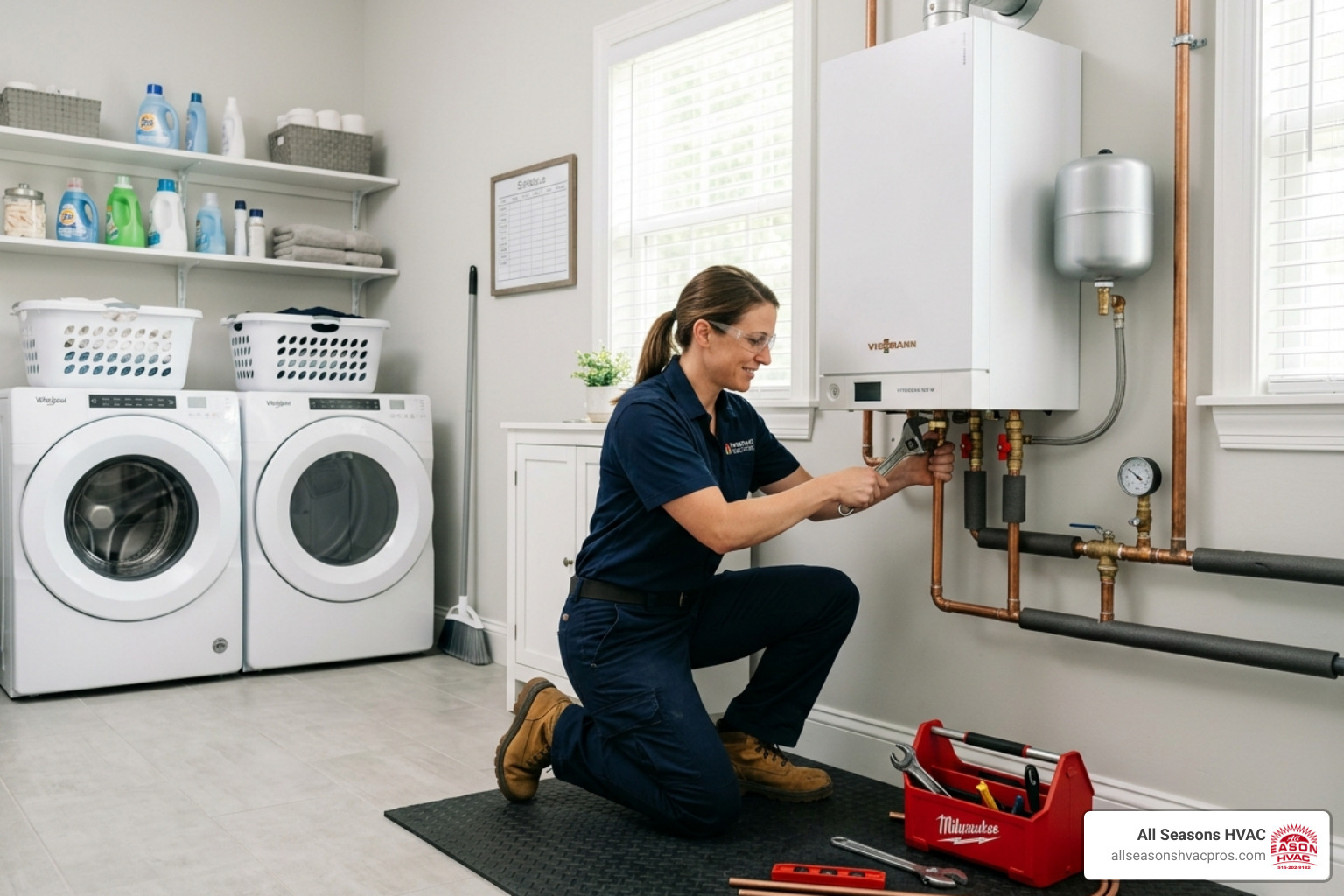
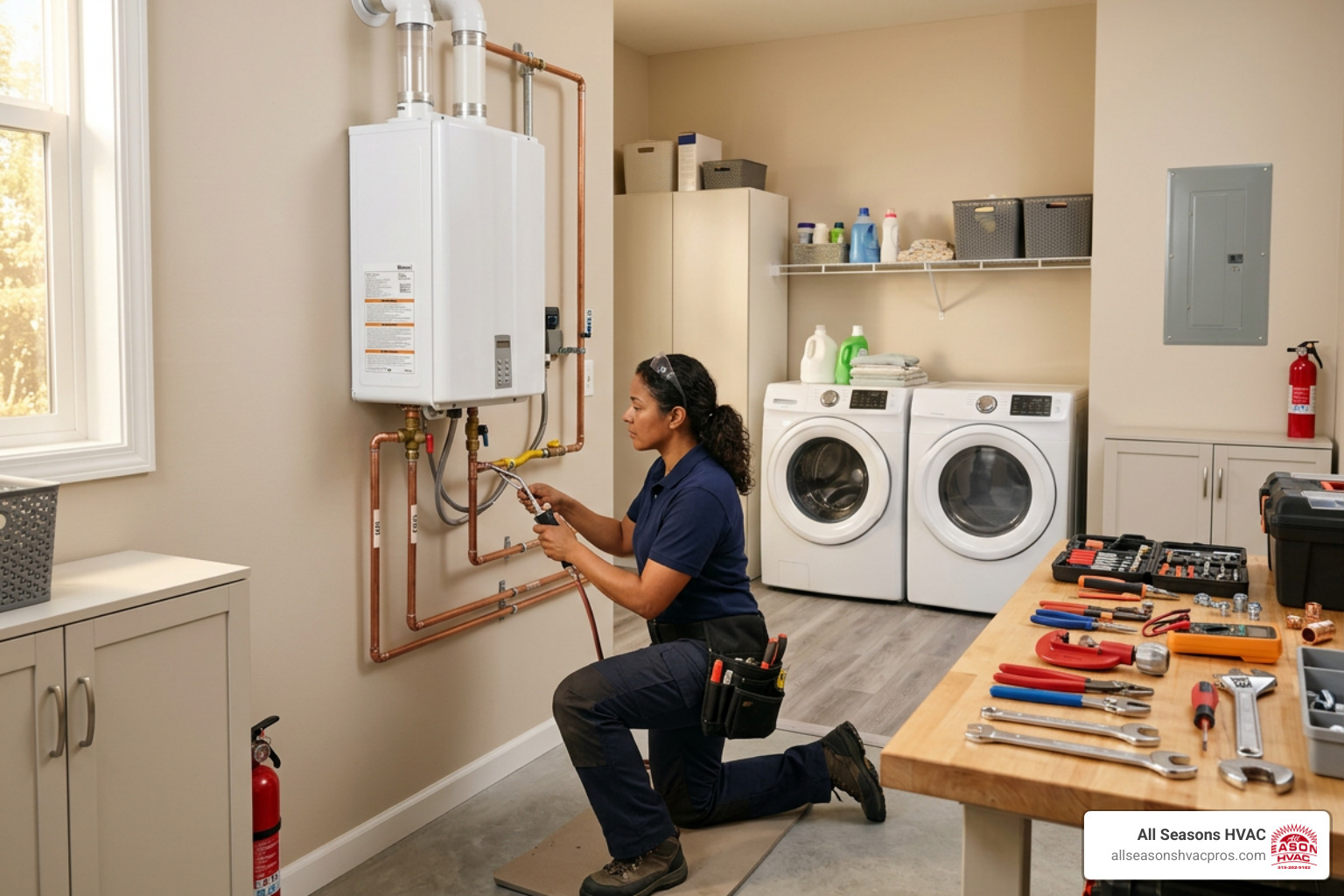
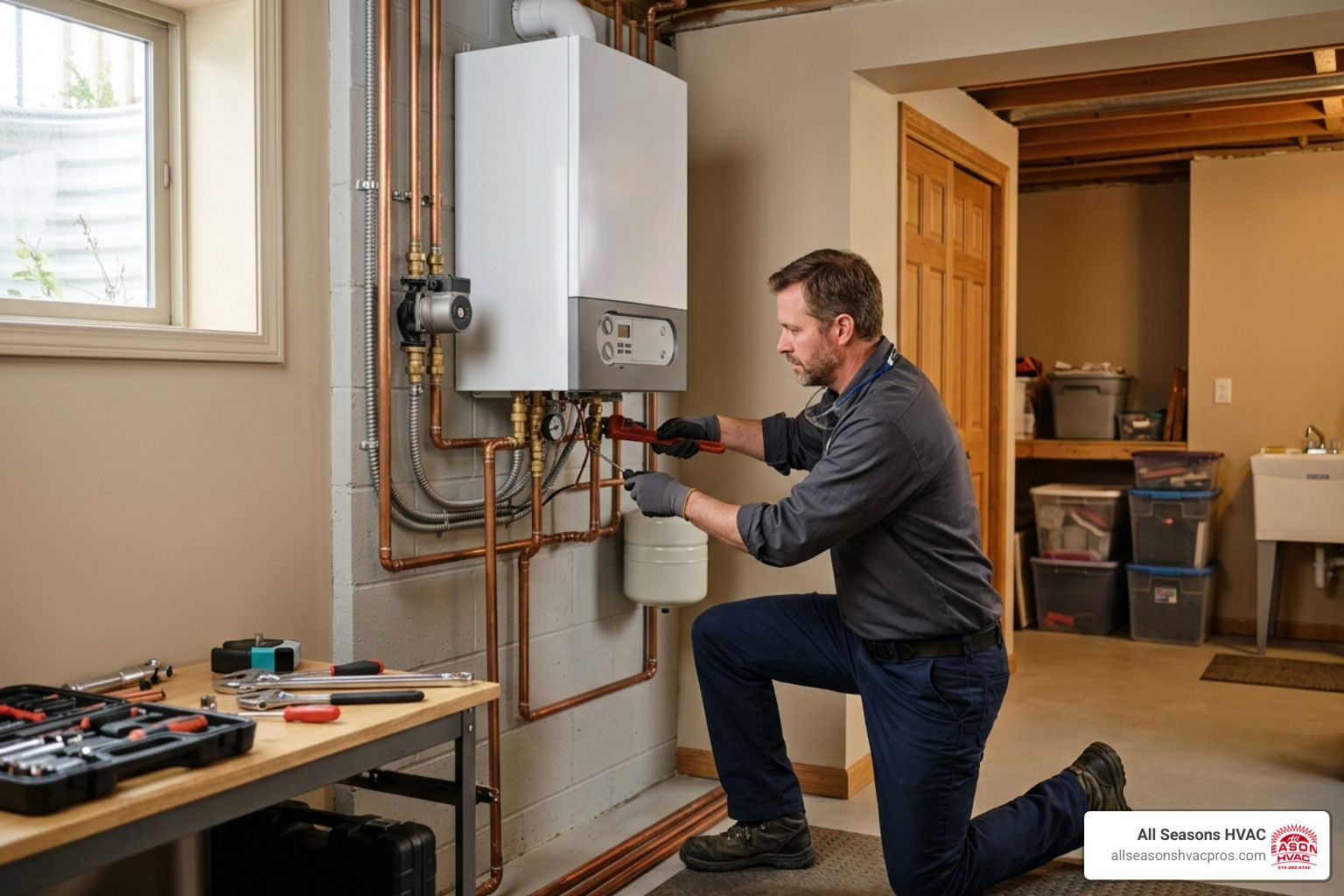
During the actual Safely Replacing Your Boiler process, the technician must manage pressure levels and expansion tanks carefully. They should also perform combustion safety testing to ensure no carbon monoxide is leaking into your living space. To Ensure a Smooth Boiler Installation, we always recommend clearing the work area and ensuring the technician has easy access to your gas and water shut-off valves.
Evaluating Service Guarantees
A trustworthy installer stands behind their work. Look for companies that offer:
- Workmanship Warranties: This covers the labor and piping if something goes wrong shortly after install.
- Manufacturer Protection: Ensure the company is an authorized dealer for the brand they are installing to keep the equipment warranty valid.
- 24/7 Support: Since boilers love to break down at 2:00 AM on a Sunday, having a company that answers the phone around the clock is vital.
Post-Installation Care and Long-Term Maintenance
Once your new boiler is humming along, your job isn’t quite over. To get the full 15+ years out of your investment, you need to be proactive. Think of it like a car; you wouldn’t drive 100,000 miles without an oil change, right?
Annual tune-ups are the “secret sauce” to boiler longevity. During these visits, a technician will flush the system to remove any sediment (especially important with Grimes’ hard water), check the water pH levels to prevent internal corrosion, and lubricate the circulator pumps. They will also inspect the expansion tank; if this tank fails, the pressure in your system can spike, causing the safety relief valve to spray water all over your basement.
For a deeper look at what goes into these visits, our Complete Guide to Boiler Repairs explains how small adjustments today prevent massive headaches tomorrow.
Frequently Asked Questions about Boiler Services
How long does a professional installation typically take?
Most residential boiler installations in Grimes, IA take between one and three days. A simple “swap” of an old gas boiler for a new one is usually a one-day job. However, if we are converting your home from a different heat source, installing new radiant floor tubing, or upgrading old, leaky pipes, the process can take longer. We always aim to minimize the time your home is without heat.
What maintenance is required for high-efficiency boilers?
High-efficiency condensing boilers require slightly different care than old-school units. Because they “condense” water vapor to extract more heat, they have a condensate drain that must be kept clear. We also need to clean the heat exchanger surfaces more frequently because the passages are much tighter and more efficient. Checking the “acidic” level of the condensate is also a standard part of our safety check.
Are there financing options for new heating systems?
Absolutely. We understand that a new boiler is a significant investment. At All Seasons HVAC, we offer budget-friendly financing plans designed to make year-round home comfort affordable. These plans allow you to get the high-efficiency system you need today while breaking the cost into manageable monthly payments.
Conclusion
Choosing the right team for your boiler installation in Grimes, IA doesn’t have to be a stressful experience. By recognizing the early warning signs of failure, choosing a high-efficiency system tailored for the Central Iowa climate, and insisting on a licensed professional who understands hydronics, you can ensure your home stays a warm sanctuary for decades.
At All Seasons HVAC, we pride ourselves on being the local experts that Grimes families trust. Whether you need an emergency replacement or you’re planning a proactive upgrade to a more efficient system, our team is ready to help with quality workmanship and budget-friendly financing.
Don’t wait for the first frost to find out your boiler isn’t up to the task. Schedule your seasonal heating maintenance in Grimes today and let us give you the peace of mind you deserve.