Why might a homeowner need a new boiler in Des Moines, IA?
As seasons change in Central Iowa, a reliable heating system is paramount for comfort. If your boiler is showing its age, it might be time to consider a replacement. Several signs can indicate that your current boiler is nearing the end of its service life and struggling to keep your home warm and efficient.
One of the most common indicators is a decrease in heating efficiency. You might notice that your home isn’t getting as warm as it used to, or that it takes longer to reach your desired temperature. This often translates to higher energy bills, as an inefficient boiler works harder to produce less heat. Frequent breakdowns and the need for constant repairs are also clear signals. While minor repairs can extend a boiler’s life, recurring issues suggest deeper problems that a new unit could resolve.
Unusual noises, such as banging, gurgling, or whistling, are often symptoms of internal issues like mineral buildup, faulty components, or low water pressure. Visible leaks or corrosion around your boiler are serious concerns that demand immediate attention, as they can lead to water damage and further system degradation.
Perhaps the most straightforward sign is the age of your current boiler. Boilers over 15 years old often operate at lower efficiency and may be nearing the end of their service life. While some older models were built to last, modern advancements offer significantly improved performance and energy savings. If your boiler is approaching or has surpassed this age, it’s wise to start thinking about a replacement. For more insights on when to make this crucial decision, you can refer to our guide on When To Consider Boiler Replacement/.
What are the common indicators of boiler trouble?
Beyond the general signs of an aging unit, specific indicators point to boiler trouble that shouldn’t be ignored. Inconsistent heating or cold spots in your home suggest that your boiler isn’t distributing heat effectively. This can be incredibly frustrating, leaving some rooms chilly while others are adequately warm.
A noticeable increase in your energy bills, without a corresponding increase in usage, is a strong indicator of declining efficiency. Your boiler is likely consuming more fuel to produce the same amount of heat, costing you more money each month. Strange smells, particularly a metallic or sulfur-like odor, could signal a gas leak or other hazardous issues within the system.
Pilot light issues, such as a pilot light that frequently goes out or changes color (it should be blue), indicate a problem with the gas supply or burner. These issues can compromise safety and efficiency. Visible leaks, even small drips, can escalate quickly and lead to significant damage or mold growth. For a detailed look at this specific problem, check out our article on Signs Your Boiler Is Leaking/. Boilers over 15 years old are approaching the end of their service life and become less efficient, making these issues more prevalent.
What factors are crucial when selecting a new boiler for your home?
Choosing a new boiler for your home in Des Moines, IA, involves several critical considerations to ensure you get a system that perfectly matches your heating needs and lifestyle. It’s not just about replacing the old with the new; it’s about upgrading to a solution that provides optimal comfort and efficiency for years to come.
First, understanding the different boiler types—combi, system, and conventional—is essential. Each type serves different household needs regarding hot water demand and space availability. Second, the fuel type is a significant factor. While natural gas is common in many Central Iowa communities, some homes might rely on oil or even electric boilers. We can help you determine the most practical and efficient fuel source for your property.
Third, determining the correct boiler size, measured in BTU (British Thermal Units) output, is crucial. An undersized boiler will struggle to heat your home adequately, while an oversized one will cycle on and off too frequently, leading to inefficiency and premature wear. This sizing depends on various factors, including your home’s square footage, insulation quality, and local climate. Finally, considering energy efficiency ratings, such as AFUE (Annual Fuel Utilization Efficiency), will help you choose a boiler that minimizes energy consumption and lowers your utility bills. Our All Seasons HVAC technicians are experts at assessing your home’s specific requirements to recommend the ideal boiler solution tailored just for you.
How do boiler types differ for various homes?
The three main types of boilers—combi, system, and conventional—each offer distinct advantages depending on your home’s size, hot water demands, and existing heating infrastructure.
- Combi Boilers: These compact units are excellent space-savers as they provide both central heating and instant hot water directly from the boiler, eliminating the need for a separate hot water cylinder or cold water tank. They are ideal for smaller homes or properties with limited space and a lower demand for simultaneous hot water use.
- System Boilers: Unlike combi boilers, system boilers heat water for your central heating system and also store hot water in a separate hot water cylinder. They don’t require a cold water tank, making them a good choice for homes with multiple bathrooms where hot water might be needed from several taps at once.
- Conventional Boilers (also known as Regular or Heat-Only Boilers): These are the most traditional type, working with both a cold water tank (usually in the attic) and a hot water cylinder. They are best suited for larger homes that have traditional heating systems already in place and a significant demand for hot water, as they can supply large quantities of hot water to multiple outlets simultaneously.
We can help you navigate these options to find the perfect fit for your Des Moines, IA, home.
How do you calculate the right boiler size for your home?
Calculating the right boiler size is a critical step in ensuring your heating system operates efficiently and effectively. It’s not a one-size-fits-all solution, and professional assessment is paramount. Several factors influence the ideal BTU output for your new boiler:
- Home Square Footage: Naturally, larger homes require more heating power. The heating demands of a home, and thus the required boiler size, increase significantly with larger square footage.
- Insulation Quality: A well-insulated home retains heat better, meaning it might require a smaller boiler than a poorly insulated home of the same size.
- Number and Type of Windows: Older, single-pane windows lose more heat than modern, energy-efficient ones.
- Climate Zone: Living in Central Iowa, we experience cold winters, which means our boilers need to work harder than those in milder climates.
- Number of Occupants and Hot Water Demands: More people often mean higher hot water usage, which influences the boiler’s capacity, especially for combi or system boilers.
Avoiding an undersized boiler is crucial, as it will struggle to heat your home, leading to discomfort and constant strain on the system. Conversely, an oversized boiler will short-cycle, turning on and off too frequently, which wastes energy and can shorten the boiler’s lifespan. Our team considers all these variables to accurately determine the optimal boiler size for your specific home, ensuring maximum comfort and efficiency.
What does the professional boiler installation process involve?
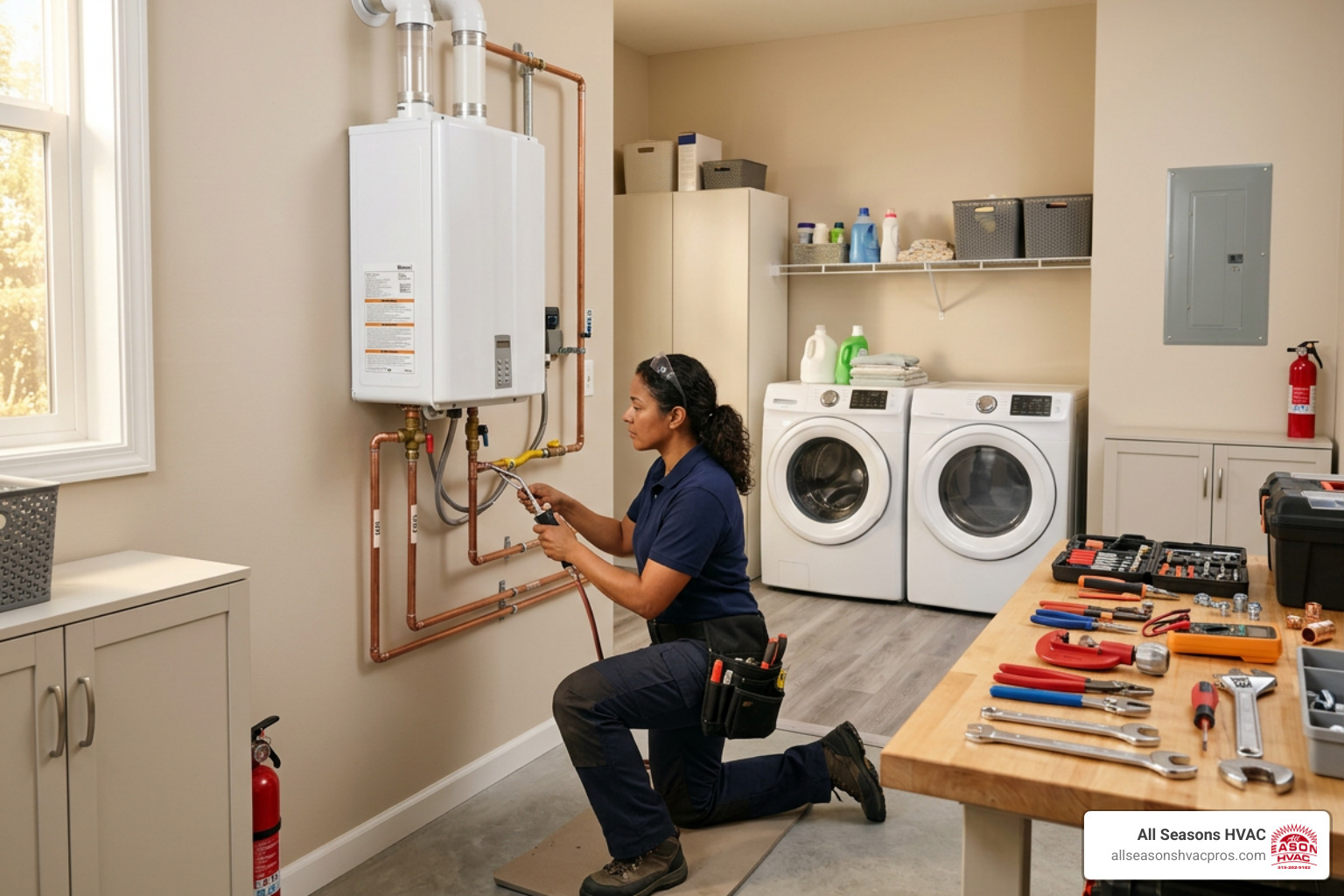
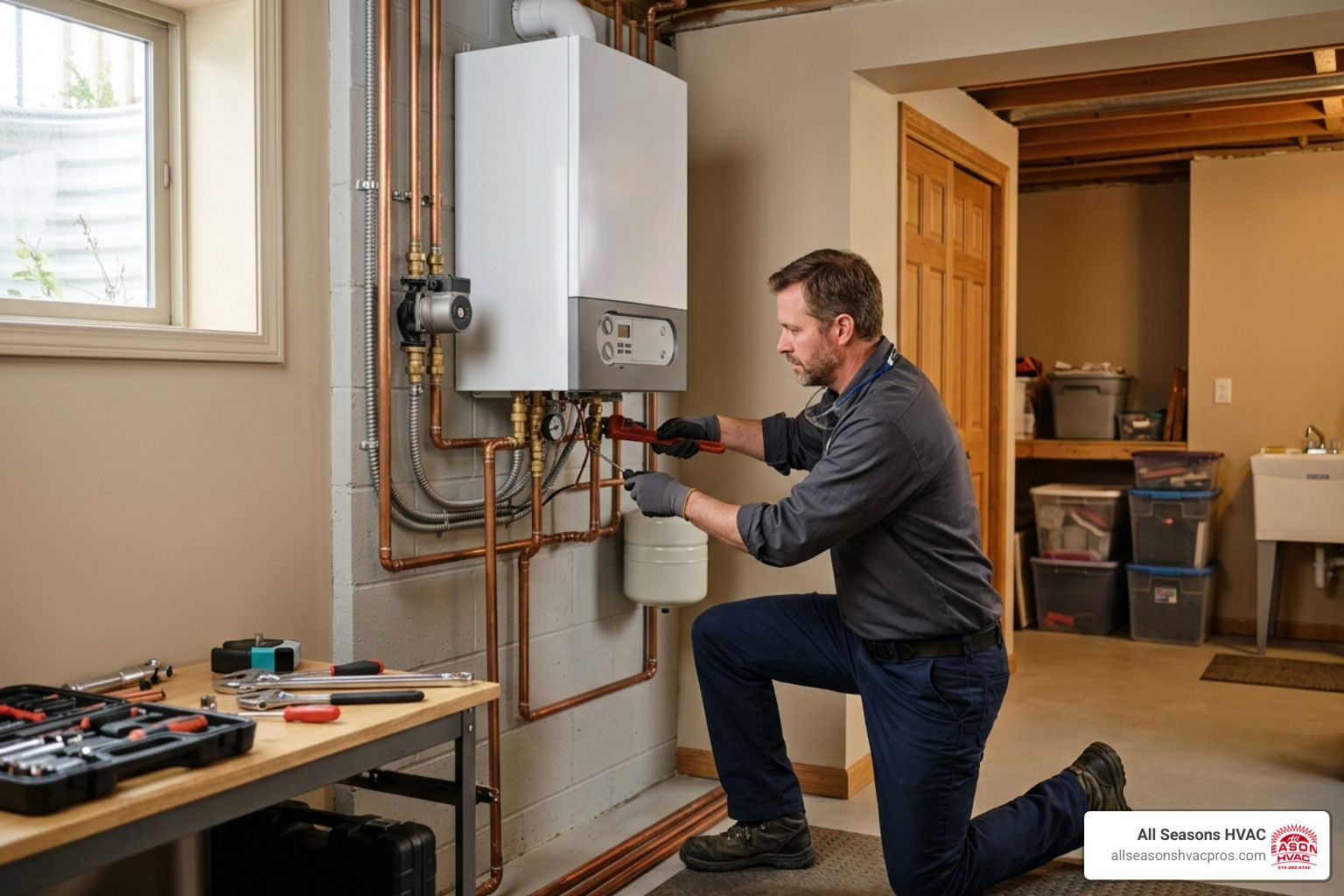
When you choose us for your boiler installation in Des Moines, IA, you’re opting for a seamless and professional experience. The process is designed to be thorough, efficient, and minimally disruptive to your daily life. Here’s what you can expect:
The first step is an initial assessment and planning phase. Our certified technicians will visit your home to evaluate your existing heating system, assess your heating needs, and confirm the optimal location for your new boiler. This planning ensures everything is in place for a smooth transition.
Next, we safely remove your old boiler. This involves carefully disconnecting it from your home’s gas, water, and electrical lines, and then responsibly disposing of the unit. We prioritize safety and cleanliness throughout this stage. Once the old unit is out, we prepare the installation site for your new boiler, ensuring the area is clean, level, and ready for the new equipment.
The core of the installation involves connecting your new boiler to your home’s gas, water, and electrical supplies. Our technicians meticulously install the flue system for proper ventilation, ensuring safe exhaust of combustion gases. Every connection is made with precision and tested for integrity.
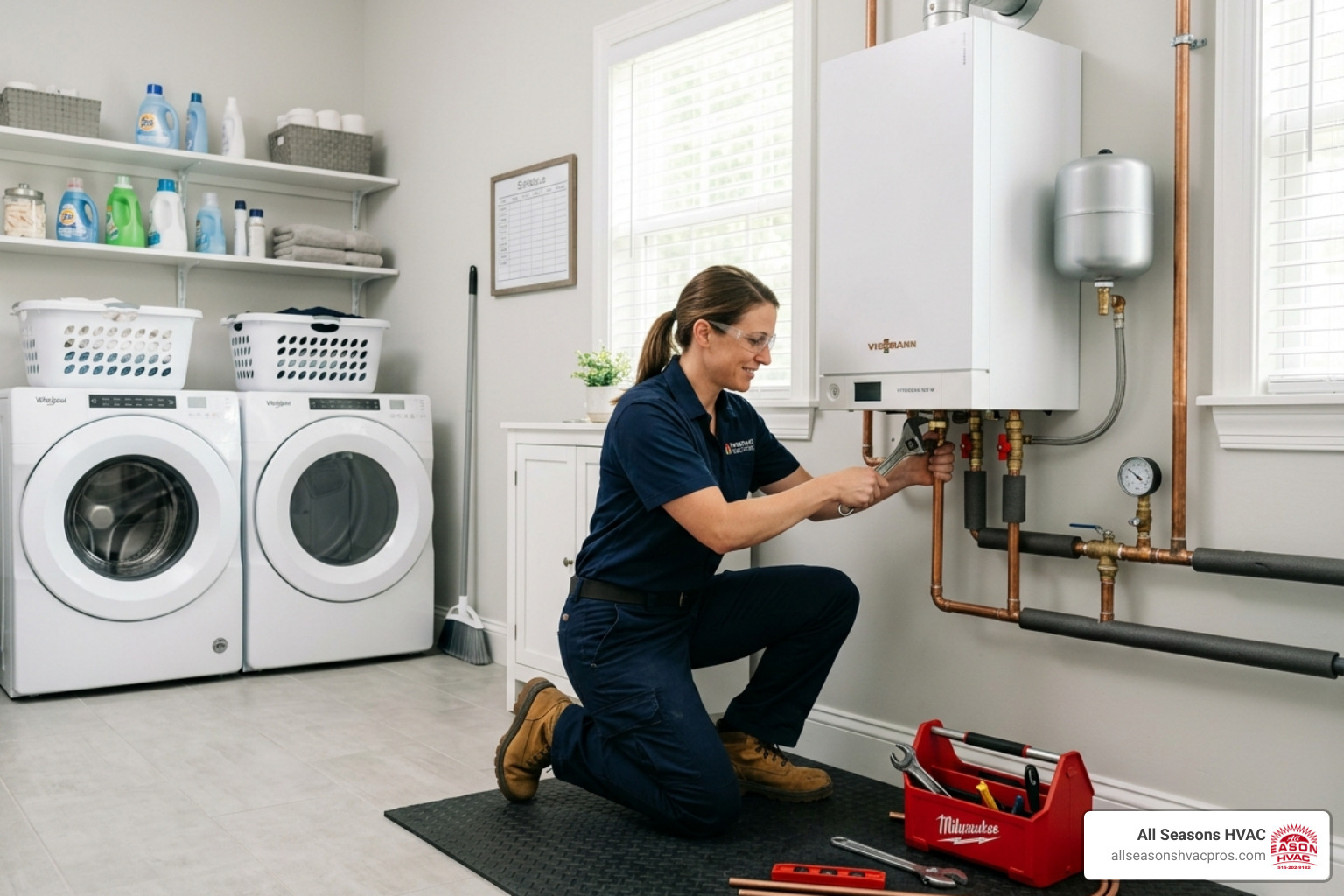
After all connections are secure, we move to system testing and commissioning. This involves filling the system with water, checking for leaks, bleeding radiators to remove air, and ensuring the boiler fires up correctly. We also calibrate the controls to optimize performance and efficiency. Finally, we conduct a thorough post-installation cleanup, leaving your home tidy. Our team will then guide you through the features of your new boiler, explain its operation, and provide essential maintenance tips. We are committed to ensuring Ensure A Smooth Boiler Installation/ from start to finish. Most boiler installations can be completed within one to three days, depending on complexity.
What should homeowners expect on installation day?
On the day of your boiler installation, our team at All Seasons HVAC strives to make the process as smooth and stress-free as possible. Here’s what you can anticipate:
Our certified technicians will arrive promptly, ready to begin work. We understand the importance of your home, so we take precautions to protect your property, laying down protective coverings in work areas to minimize dust and debris. Throughout the installation, our team maintains clear communication, keeping you informed of our progress and any important updates. We’re always available to answer your questions and address any concerns you might have.
Once the new boiler is installed, we conduct thorough testing to ensure every component is functioning correctly and safely. This includes checking water pressure, testing gas connections, and verifying that the heating and hot water systems are operating optimally. Before we leave, we take the time to explain the features of your new boiler, demonstrate how to use the controls, and provide guidance on essential maintenance. We want you to feel confident and comfortable with your new system. Our commitment means All Seasons HVAC ensures a smooth and transparent installation experience from start to finish, leaving you with a perfectly functioning and efficient heating system.
How long does a typical boiler installation take?
The duration of a boiler installation can vary depending on several factors, but most boiler installations can be completed within one to three days, depending on complexity.
For a straightforward, like-for-like boiler replacement—meaning you’re replacing an old boiler with a new one of the same type and in the same location—the process can often be completed within a single day, sometimes even just a few hours. This is because much of the existing pipework and connections can be reused.
However, if your installation involves a system conversion, such as switching from a conventional boiler to a combi boiler, or relocating the boiler to a different part of your home, the process will naturally take longer. These more complex projects might require modifications to your existing pipework, gas lines, or electrical connections, and could extend the installation time to two or even three days. Our team will provide you with a clear timeline after our initial assessment, so you know exactly what to expect.
Why is professional boiler installation essential for safety and efficiency?
Professional boiler installation is not just a recommendation; it’s a necessity for the safety of your household and the optimal performance of your heating system. Attempting a DIY installation or hiring an unqualified individual can lead to serious consequences, jeopardizing both your home and your family.
One of the primary reasons for professional installation is ensuring compliance with local building codes and safety regulations. In Des Moines, Ankeny, Waukee, and all surrounding Central Iowa communities, there are specific standards that must be met for gas and heating appliance installations. Our certified technicians are intimately familiar with these regulations, guaranteeing that your new boiler is installed legally and safely. This prevents dangerous gas leaks or carbon monoxide issues, which can be life-threatening.
Beyond safety, professional installation is crucial for optimizing boiler performance and achieving maximum energy efficiency. An improperly installed boiler might not heat your home effectively, leading to wasted energy and higher utility bills. Professional installation ensures optimal performance by matching boiler size to home heating needs, and configuring the system for peak efficiency. Furthermore, most boiler manufacturers require professional installation to validate their warranties. Without proof of professional installation, any future issues might not be covered, leaving you responsible for costly repairs. For more information on ensuring a safe replacement, please see our guide on Safely Replacing Your Boiler/.
What are the risks of DIY boiler installation?
The temptation to save money by attempting a DIY boiler installation might seem appealing, but the risks far outweigh any potential savings. Boiler installation is a complex task involving gas lines, water connections, and electrical wiring, all of which can be extremely dangerous if handled improperly.
Improper connections can lead to hazardous gas leaks, posing a severe risk of fire, explosion, or carbon monoxide poisoning. Carbon monoxide is an invisible, odorless gas that can be fatal. Beyond the immediate dangers, an incorrectly installed boiler can lead to system malfunctions, frequent breakdowns, and a significantly reduced lifespan for your new unit. Most manufacturers will void their warranties if the boiler is not installed by a certified professional, leaving you without coverage for future repairs. Professional installation cannot be overstated for peak efficiency and safety, protecting your investment and, most importantly, your family’s well-being.
How do certified technicians ensure quality and safety?
Our certified technicians at All Seasons HVAC are the cornerstone of our commitment to quality and safety in every boiler installation. Their expertise and rigorous training ensure that your new heating system is installed to the highest standards.
Our team possesses in-depth knowledge of various boiler types, brands, and their intricate components. This expertise allows them to handle complex systems with precision, ensuring every connection—from gas lines to water pipes and electrical wiring—is secure and compliant. They adhere strictly to industry standards and local regulations, which are designed to prevent hazards and optimize performance. This includes proper sizing and configuration of the boiler for your home, which is vital for both efficiency and longevity.
Furthermore, our technicians perform thorough testing and calibration after installation. This involves checking for leaks, ensuring correct water pressure, verifying proper ventilation, and calibrating controls for optimal heating. They don’t just install a boiler; they commission a complete heating system designed for safety, efficiency, and reliable operation. All Seasons HVAC employs experienced, professional HVAC technicians who prioritize reliability, quality workmanship, and customer satisfaction, giving you peace of mind with every service.
How can homeowners maximize their boiler’s lifespan and efficiency after installation?
Once your new boiler is professionally installed, the journey to long-term home comfort and efficiency doesn’t end. Maximizing its lifespan and maintaining peak performance requires ongoing care and attention.
The most crucial step is committing to regular maintenance and annual servicing. Just like your car, your boiler benefits greatly from routine check-ups. These services help identify potential issues before they become major problems, ensure all components are functioning correctly, and keep the system running efficiently. Understanding your warranty coverage is also important, as it outlines what’s protected and for how long, often requiring professional maintenance to remain valid.
Investing in a high-efficiency boiler is a significant step, and maintaining that efficiency ensures you continue to reap the benefits. Our team can also offer tips for extending your boiler’s lifespan, such as maintaining proper water pressure and addressing minor issues promptly. For more detailed information on common issues and repairs, you can consult our Complete Guide To Boiler Repairs/. Boilers typically last between 15 to 25 years with proper maintenance, so consistent care is key to reaching the higher end of that range.
What are the benefits of high-efficiency boilers?
Upgrading to a high-efficiency boiler offers a multitude of benefits that extend beyond simply heating your home. These modern units are engineered to convert a much larger percentage of their fuel into usable heat, leading to significant advantages for homeowners in Des Moines, IA:
- Reduced Energy Consumption and Lower Utility Bills: This is perhaps the most compelling benefit. High-efficiency boilers are up to 98% efficient, while standard boilers are around 80% efficient. This means less fuel is wasted, directly translating to noticeable savings on your monthly energy bills.
- Smaller Carbon Footprint: By consuming less fuel, high-efficiency boilers also produce fewer greenhouse gas emissions, contributing to a healthier environment.
- Consistent and Reliable Heating: Modern high-efficiency boilers often incorporate advanced controls and technology that provide more stable and consistent heating throughout your home, eliminating cold spots and ensuring optimal comfort.
- Longer Lifespan: While initial costs might be higher, the reduced strain on components due to efficient operation can contribute to a longer operational lifespan for the unit, offering a better return on your investment over time.
These benefits make high-efficiency boilers a smart choice for any homeowner looking to improve their home’s comfort, reduce operating costs, and contribute to environmental sustainability.
What maintenance plans are available after installation?
To help you maximize your boiler’s lifespan and efficiency, we offer comprehensive maintenance plans designed to keep your system in top condition year-round. These plans go beyond simple repairs, focusing on preventative care.
Our scheduled preventative maintenance includes regular inspections by our certified technicians. During these visits, we thoroughly check all boiler components, connections, and safety features. We perform essential cleaning and tuning services, which can include flushing the system, checking pressure levels, and adjusting controls for optimal performance.
These routine checks are crucial for the early detection of potential issues. Catching a small problem early can prevent it from escalating into a costly breakdown, saving you time, money, and discomfort. Our maintenance plans are tailored to ensure your boiler runs efficiently, safely, and reliably for many years. All Seasons HVAC offers comprehensive maintenance plans to keep your boiler running efficiently for years to come, providing you with peace of mind and consistent home comfort.
Frequently Asked Questions about Boiler Installation in Des Moines, IA
What permits and regulations are required for boiler installation in Central Iowa?
When undertaking a boiler installation in Central Iowa, including Des Moines, Ankeny, Waukee, West Des Moines, Norwalk, Indianola, and other surrounding communities, certain permits and regulations are typically required. These requirements are in place to ensure the safety and proper functioning of your heating system, as well as compliance with local building codes.
For any work involving gas lines, water connections, or significant electrical modifications, local authorities often mandate permits. These permits ensure that the installation adheres to established safety standards and is inspected by qualified officials. Our professional team understands these local requirements thoroughly. Permits are often needed for boiler installations to meet safety codes; professionals typically handle securing necessary permits and ensuring compliance with local regulations in areas like Des Moines, Ankeny, and Waukee, streamlining the process for you and ensuring your installation is fully compliant.
What warranties are typically available after a new boiler installation?
After a new boiler installation, you can generally expect two types of warranties: a manufacturer’s warranty on the boiler itself and a labor warranty from the installer.
Manufacturer warranties typically cover parts for a specified period, often ranging from 5 to 12 years, and sometimes even longer for specific components like the heat exchanger. The duration and coverage can vary significantly by brand and model. Professional installation is usually a prerequisite for these warranties to be valid. Additionally, timely registration of your new boiler with the manufacturer is often required to activate the full warranty coverage.
The labor warranty, provided by us as your installer, covers the workmanship of the installation. This typically ranges from one to two years and ensures that if any issues arise directly from the installation process, we will address them at no additional cost. We always provide clear information on both manufacturer and labor warranties so you know exactly what to expect.
How does boiler lifespan vary and what factors influence it?
Boiler lifespan can vary considerably, but typically, boilers last between 15 to 25 years with proper maintenance. Several factors play a significant role in how long your heating system will reliably serve your home.
The boiler type itself can influence longevity; some materials and designs are inherently more durable than others. Installation quality is paramount; a professional, correctly installed boiler will always outlast one that’s been poorly fitted, as improper connections or sizing can lead to premature wear. Water quality in your heating system can also be a factor, as hard water can lead to mineral buildup and corrosion over time.
Finally, usage patterns and, most importantly, regular servicing are key determinants. A boiler that is used heavily without consistent maintenance will degrade faster than one that receives annual check-ups. Regular servicing helps identify and address minor issues before they become major problems, extends the life of components, and ensures the system operates efficiently, contributing significantly to reaching the higher end of that 15-25 year lifespan.
Conclusion
Choosing a new boiler and ensuring its professional installation is a significant investment in your home’s comfort and efficiency. By understanding the signs it’s time for a replacement, selecting the right type and size, and entrusting the installation to certified experts, you can enjoy reliable heating for years to come. For homeowners in Des Moines, IA, and surrounding communities like Norwalk, Indianola, Ankeny, and Waukee, All Seasons HVAC is dedicated to providing comprehensive boiler installation services, backed by experienced technicians and budget-friendly financing plans. Ensure your home stays warm and comfortable with a trusted local partner.
Contact All Seasons HVAC for expert boiler installation in Des Moines, IA.